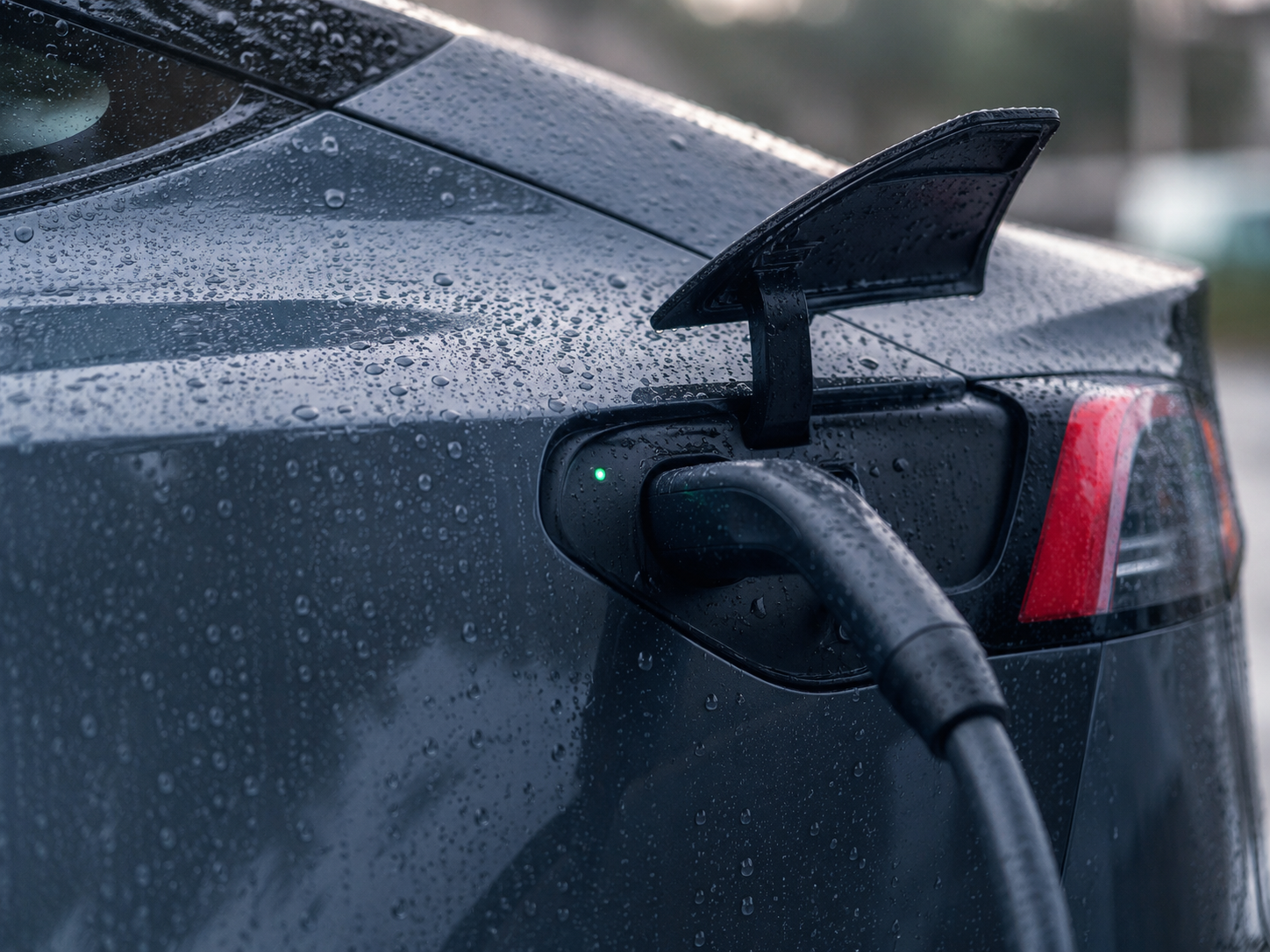

How do you charge a US-market Tesla Model 3 after bringing it to Europe? We had to answer that question for our own car. Its North American charging inlet needed a compatible connection to European equipment, and that search helped shape our adapter range.
Today, EVniculus brings EV charging stations, cables, portable chargers and specialist adapters together in one hub. Our work still begins with the question behind that first challenge: what will connect this particular vehicle to the equipment its owner wants to use?
You might be setting up charging beside your home, buying an imported EV or preparing to power equipment on a camping trip. Each situation calls for a different combination of hardware. Establishing that combination starts with a few details about your car and everyday plans.
Start With the Car You Actually Own
The model name on the boot tells you only part of what you need to know about charging. Its original market, model year and charging hardware can matter too. A European version and an imported version of the same vehicle may have different inlets.
Across European infrastructure, Type 2 is the main AC charging interface, while CCS Combo 2 is commonly used for DC charging. AC equipment supplies alternating current to the car, where the onboard charger converts it for the battery. DC charging performs that conversion outside the vehicle.
EVSE, short for Electric Vehicle Supply Equipment, is the equipment used to supply electricity to an EV. Choosing it involves matching the power supply, charging interface and vehicle requirements.
For an imported car, check the inlet before ordering accessories. Our catalogue includes products for CCS1, NACS, GB/T and CHAdeMO applications. Their descriptions identify the charging method and intended connection.
A photograph of your inlet, together with the model year and original market, gives a compatibility enquiry a useful starting point. Add the details of the station or charger you want to use.
If you are still choosing an imported car, ask for inlet photographs and the charging specification before agreeing to buy it. You can then assess the equipment needed at home and on your usual routes. Charging becomes part of the purchase decision while you still have choices.
Choose Home Charging Around the Hours You Have
Think about a normal evening. What time does the car return, and when will you need it again? How much energy must be replaced between those two moments?
Consider a driver who needs to put 20 kWh back into the battery. At a steady 7 kW, the basic calculation is about 2.9 hours. At 11 kW, it is about 1.8 hours. Allow additional time for charging losses and any reductions in power; these are planning estimates.
If the car stays parked all night, either rate may cover that requirement. A short lower-cost tariff window could make the difference relevant. Your timetable gives the power rating a purpose.
An EV charger must also suit the vehicle’s AC limit and the electrical installation. A car that accepts 11 kW on AC will retain that limit when connected to a 22 kW wallbox. Compare the vehicle’s AC rating with the charger specification before choosing the equipment.
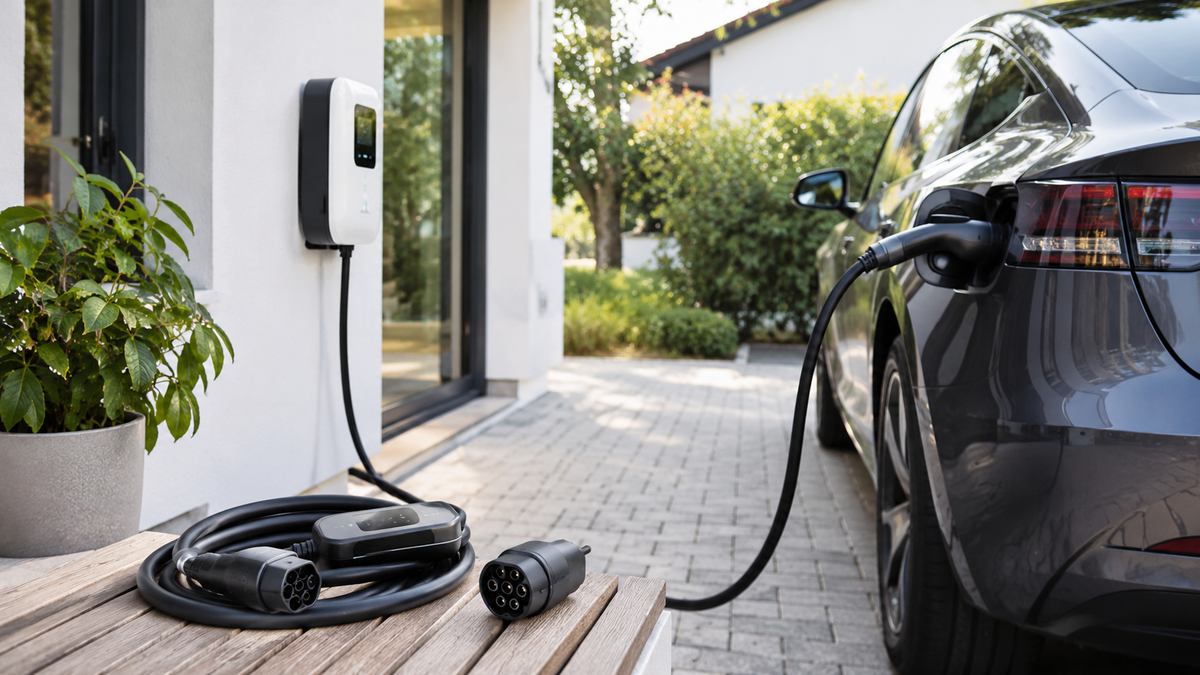
Our 22 kW smart wallbox has an integrated Type 2 cable, app controls and RFID access. You can schedule sessions and restrict who starts charging. An electrician should assess the supply, protection and installation location before the equipment is fitted.
For occasional charging elsewhere, our portable Type 2 range includes a 3.6 kW model with adjustable current. Its suitability depends on the available socket and circuit. Lowering the current setting does not establish that an unfamiliar installation is suitable for continuous charging.
The Details You Notice in a Parking Bay
Cable length becomes much easier to judge when you look at where the car actually stops. Measure the route between the charging point and the inlet in your usual parking position, including the distance around the vehicle if necessary.
A comfortable reach matters. You should be able to connect without pulling the cable taut or leaving it across a walkway. A longer cable also takes more room to carry, so consider where you will store it.
At a socketed AC charging point, you generally bring a suitable cable. Tethered equipment supplies its own. Check the station details before arriving, especially if you expect to charge while staying at a hotel or visiting another property.
The cable’s connector, current rating and phase capability need to match the application. The same attention to detail helps with portable chargers: a familiar-looking supply plug still needs a suitable circuit behind it.
Give Each Adapter a Specific Job
An adapter is easier to choose once you describe the connection in a sentence: “I want to use this charging point with this vehicle.” That identifies the two interfaces and the intended charging method.
For example, our CCS2-to-CHAdeMO adapter connects compatible CHAdeMO vehicles to CCS2 charging equipment. The product page lists tested stations and provides software resources. Owners can review that information alongside the requirements of their own vehicle.
We use a Nissan Leaf as a test vehicle for our adapter work. Charging communication can involve software as well as hardware, so testing and updates form part of the compatibility picture.
Keep the product’s rating separate from the car’s charging capability. An adapter able to support a high power level still operates within the limits of the vehicle and charging point. Battery conditions can also affect the power accepted during a session.
Some adapters are intended for AC, others for DC, and certain specialist products support combined applications. Confirm what the particular product covers.
For reliable EV charging, keep the equipment details together: vehicle specification, adapter model, relevant software information and the charging point you intend to use. This also makes a support inquiry easier to investigate.
What Do You Want to Power While Parked?
V2L, or vehicle-to-load, lets a compatible EV supply electricity to external equipment. A camping fridge, laptop or tool charger may be the reason you want it. Start with those devices and their power requirements.
Suppose your setup allows 3.6 kW in total. A kettle labelled 2,000 W and a cooker labelled 1,500 W would already use 3,500 W together, leaving little capacity for anything else. Check appliance labels and allow for equipment with a higher starting demand.
A conventional V2L adapter works with the vehicle’s built-in V2L capability. The presence of a Type 2 inlet alone does not confirm that the car supports it. Our adapter variants are selected for particular vehicle applications, so choose the version specified for your model.
The external Tesla discharger in our range works differently. It contains its own DC-to-AC inverter and requires enabled CCS support and a compatible battery voltage range. The listed 240 V version can provide up to 5 kW in total, subject to its outlet limits.
Its instructions require dry conditions and ventilation. Vehicle software updates may affect compatibility, so review the current product guidance before ordering.
For a trip, decide what needs power, how the equipment will be connected and how much charge you want to retain for driving. That gives portable power a practical place in your plans.
A European Base for Drivers and Businesses
Most of our products are stored, packed and shipped from our location in Plovdiv, Bulgaria. Our business service accepts purchase orders and enquiries about bulk quantities.
For a reseller, an adapter order needs a clear description of the vehicles customers own. For an installer, the electrical specifications and documentation belong alongside the site requirements. A mixed order may involve several variants even when the vehicles come from the same manufacturer.
Tell us which applications you are supplying and the quantities involved. Selected product pages include manuals, test documents or software resources that you can review when assessing the equipment.
Bring Us the Details of Your Next Connection
If you are unsure which product to order, send your vehicle model, year, original market and an inlet photograph, along with the charger or appliances you plan to connect.
We can help you identify the relevant options in our catalogue. A clear description of the connection is often the most useful first step towards choosing the equipment.
Frequently Asked Questions
Will a charging adapter give me access to every network?
A compatible adapter addresses the connection between the station and vehicle. Access also depends on the operator’s rules and payment arrangements. Check the intended network and charging point before travelling.
Should I buy a wallbox before the electrical assessment?
Establish the available supply and installation requirements first. The assessment can help determine an appropriate power rating and identify any work needed before fitting the charger.
Why do charging and V2L products use similar connectors?
The vehicle’s inlet can support different functions when its hardware is designed for them. Charging supplies energy to the battery; V2L supplies supported external devices. Select equipment for the intended function and vehicle.
Sources
- European Commission, Directorate-General for Mobility and Transport: Questions and Answers on the Alternative Fuels Infrastructure Regulation.
- Tesla Support: Onboard Charger.
- Hyundai Motor Europe: IONIQ 5 Features and Vehicle-to-Load Technology.
- Company information: About Us and Business Inquiries.
- Product specifications: Smart 22 kW Wallbox, Portable Type 2 Charger, CCS2-to-CHAdeMO Adapter, Type 2 V2L Adapter and Tesla V2L Discharger.