
You pull into a motorway charging hub, connect the cable to a unit marked 350 kW and see 68 kW on the car’s display. Nothing is necessarily wrong with the charger. The figure printed on the unit shows what the station can supply, not what every vehicle will accept.
To check whether your car supports EV fast charging, inspect its charging inlet and find the maximum DC charging rate in the technical specification. A compatible connector allows the car and charger to communicate. The vehicle’s own hardware and battery management system decide how much power enters the battery.
Imported cars need an extra check. A model built for North America, China or Japan may use a different connector from the version sold under the same name in Europe.
How to Tell If Your Electric Car Supports Fast Charging
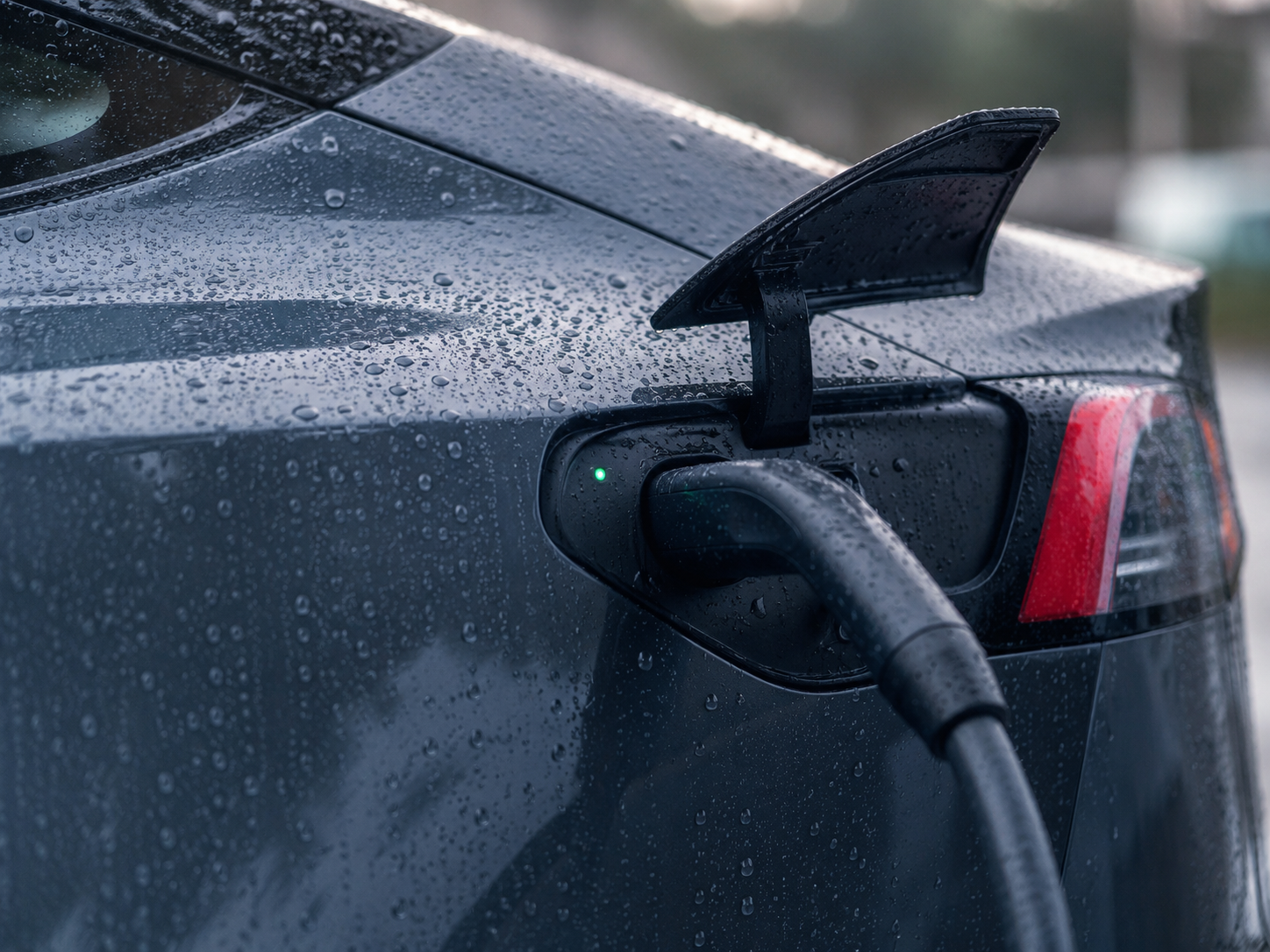
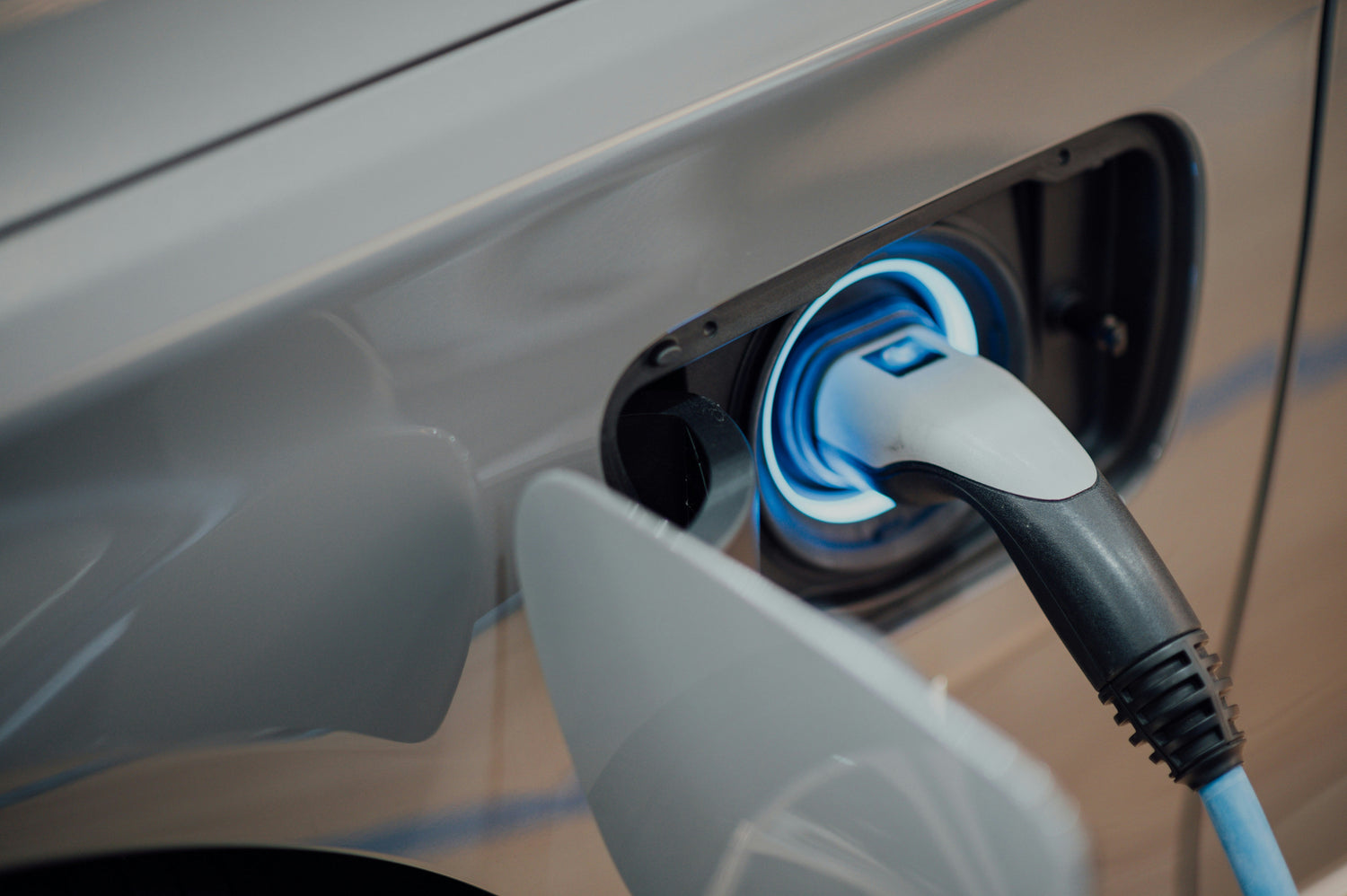
Start at the charging flap. A European CCS2 inlet has a Type 2 section at the top and two larger DC contacts underneath. CHAdeMO is usually a separate round port. Cars imported from North America may have NACS or CCS1, while Chinese-market vehicles may use GB/T.
The second check is in the owner’s manual or vehicle specification. Look for phrases such as “maximum DC charging power”, “rapid charging”, “DC input” or “10–80% charging time”.
These checks answer different questions. The inlet shows which charging standard the vehicle uses. The maximum DC rate shows how quickly it can charge under suitable conditions.
Model names alone are not enough. Charging equipment can change between production years, battery versions and regional specifications. A Nissan Leaf fitted with CHAdeMO, for example, has different public charging options from a newer CCS-equipped model, even though both carry the Leaf name.
What Fast Charging Means for an Electric Vehicle
Charging terminology can be confusing because networks, manufacturers and government statistics do not always use the same labels. The UK Department for Transport currently groups public chargers by power as follows:
|
Charger power |
UK classification |
Common use |
|
3 kW to under 8 kW |
Standard |
Home, workplace and long-stay parking |
|
8 kW to under 50 kW |
Standard Plus |
Faster AC and lower-powered public charging |
|
50 kW to under 150 kW |
Rapid |
DC charging on longer journeys |
|
150 kW and above |
Ultra-rapid |
Motorway services and high-power charging hubs |
A 22 kW AC unit is still commonly described by operators as a fast charger, even though it falls within the Standard Plus category in current UK statistics. The label matters less than the power type and the limit of the car connected to it.
Most discussions of fast EV charging during long trips refer to direct-current charging. DC power passes through the vehicle’s dedicated rapid-charging system rather than its onboard AC charger. This permits much higher power than a typical home charger.
The car still controls the session. An ultra-rapid unit does not automatically turn every compatible electric vehicle into an ultra-rapid-charging model.
Check the Charging Port Before Comparing EV Chargers
Connector compatibility is the first practical restriction. A charger may be nearby, available and reasonably priced, yet unusable because its cable does not match the vehicle.
CCS and CCS2
CCS stands for Combined Charging System. CCS2 is now the standard connection on many electric cars sold in Europe and the UK.
The upper part of the inlet accepts a Type 2 connector for AC charging. Two additional contacts underneath carry DC power. This allows the same vehicle inlet to serve a home charger and a public rapid charger.
Seeing CCS2 under the charging flap confirms that the car has a DC connection. It does not reveal the vehicle’s charging speed. One CCS2-equipped car may peak at 50 kW, while another may accept more than 200 kW.
CHAdeMO
CHAdeMO appears mainly on Japanese electric vehicles, including earlier Nissan Leaf and e-NV200 models and several Mitsubishi cars. The connector is large, round and normally separate from the AC inlet.
These cars can still rapid-charge, but CHAdeMO availability is becoming more limited as European networks install more CCS units. A driver may find one CHAdeMO cable at a site with six or eight CCS bays, or no CHAdeMO connection at all. Battery temperature can also affect these vehicles noticeably. Nissan’s charging guidance explains that rapid charging may take longer when the battery is particularly cold or hot, and after repeated charging sessions.
NACS and Imported Tesla Vehicles
A Tesla built for Europe will generally use CCS2. A vehicle imported from the United States or Canada may retain the North American Charging Standard, known as NACS. That distinction affects more than the shape of the plug. The car, adapter and charging station must use compatible communication protocols before the charging session can begin.
Tesla Superchargers also differ by site and generation. V3 units can provide up to 250 kW, but the car may request much less. Battery temperature, current state of charge and the vehicle’s own charging architecture all affect the number shown on the screen.
Some UK Supercharger locations accept non-Tesla vehicles through the Tesla app. Others remain restricted or may be awkward to use when a car’s charging inlet sits in a different position. Checking the individual location avoids an unnecessary detour.
GB/T and Cars Imported From China
Electric cars produced for the Chinese domestic market may use GB/T. AC and DC versions of this standard are separate, which means an AC adapter cannot perform the work of a DC charging adapter.
A Chinese-market vehicle may need a CCS2-to-GB/T adapter before it can use European rapid charging stations. The adapter has to translate the electronic communication between the car and charger as well as connect the two physical interfaces.
Before buying one, verify the model, production year, battery system, charging inlet and original sales market. A product described only as “compatible with Chinese EVs” is not specific enough for a purchasing decision.
Find the Maximum DC Rate in Your Electric Car’s Specifications
The most dependable figure usually appears in the manufacturer’s technical data or owner’s manual. Vehicle apps and infotainment screens may show current charging power, but that is not always the car’s maximum capability.
Search for:
- maximum DC charging power;
- peak DC rate;
- rapid-charging capability;
- DC input;
- charging time from 10% to 80%.
Use the specification for the exact battery version. A model offered with 50 kWh and 75 kWh battery packs may have different charging limits for each one. Kilowatts and kilowatt-hours describe separate measurements. Charging power is measured in kW. Battery capacity is measured in kWh.
A 64 kWh battery can store roughly 64 kilowatt-hours of energy. It might accept a peak charging power of 50 kW, 100 kW, or another figure set by the manufacturer. The number printed beside the battery capacity does not predict the charging rate. The advertised peak also describes the best part of the charging curve, not the full session. A car rated at 150 kW may reach that figure briefly and then settle below it.
Why an EV Charging Station May Deliver Less Power Than Expected
A 350 kW charger makes up to 350 kW available. The vehicle decides how much of that power it can take. If the car has a maximum DC rate of 100 kW, connecting it to a 350 kW unit will not raise the vehicle’s limit. The display may show 100 kW under good conditions, but it may also show 72 kW, 48 kW, or another lower figure during the same session.
The charging curve changes as the battery fills. Power is often highest at a low state of charge, then begins to fall as the battery approaches 80%. Some models hold a high rate for longer. Others show a strong peak for only a few minutes.
Conditions at the station matter too. Two charging bays may share one power cabinet. A cable can reduce output when it becomes too warm. The unit may also be operating below its rated capacity because of maintenance, grid restrictions, or a communication issue. Vehicle software adds another limit. The battery management system continuously checks temperature, voltage and cell condition, then requests a power level it considers safe at that moment.

Battery Temperature and State of Charge Affect Faster Charging
A cold battery often explains disappointing winter charging speeds. Lithium-ion cells accept energy more slowly when their temperature falls outside the preferred operating range. The same protection applies when the battery becomes too hot. The car reduces power to protect the cells rather than trying to match the maximum output of the charger.
Some vehicles can precondition the battery while travelling to a charging location. Selecting the station through the built-in navigation may activate heating or cooling before arrival. Simply driving to the same charger without entering it as a destination may not trigger the process. State of charge shapes the other half of the charging curve. A car arriving with 12% remaining will usually accept more power than the same car arriving with 76%.
This is why manufacturers tend to publish 10–80% or 20–80% charging times. The final 20% often takes disproportionately longer. During a long journey, leaving at 75% or 80% and stopping again later can be quicker than waiting for a full charge. The best strategy depends on the car. Peak power attracts attention in specifications, but the average rate across the session gives a better picture of real-world use.
Choosing Public Charging Points and Charging Stations
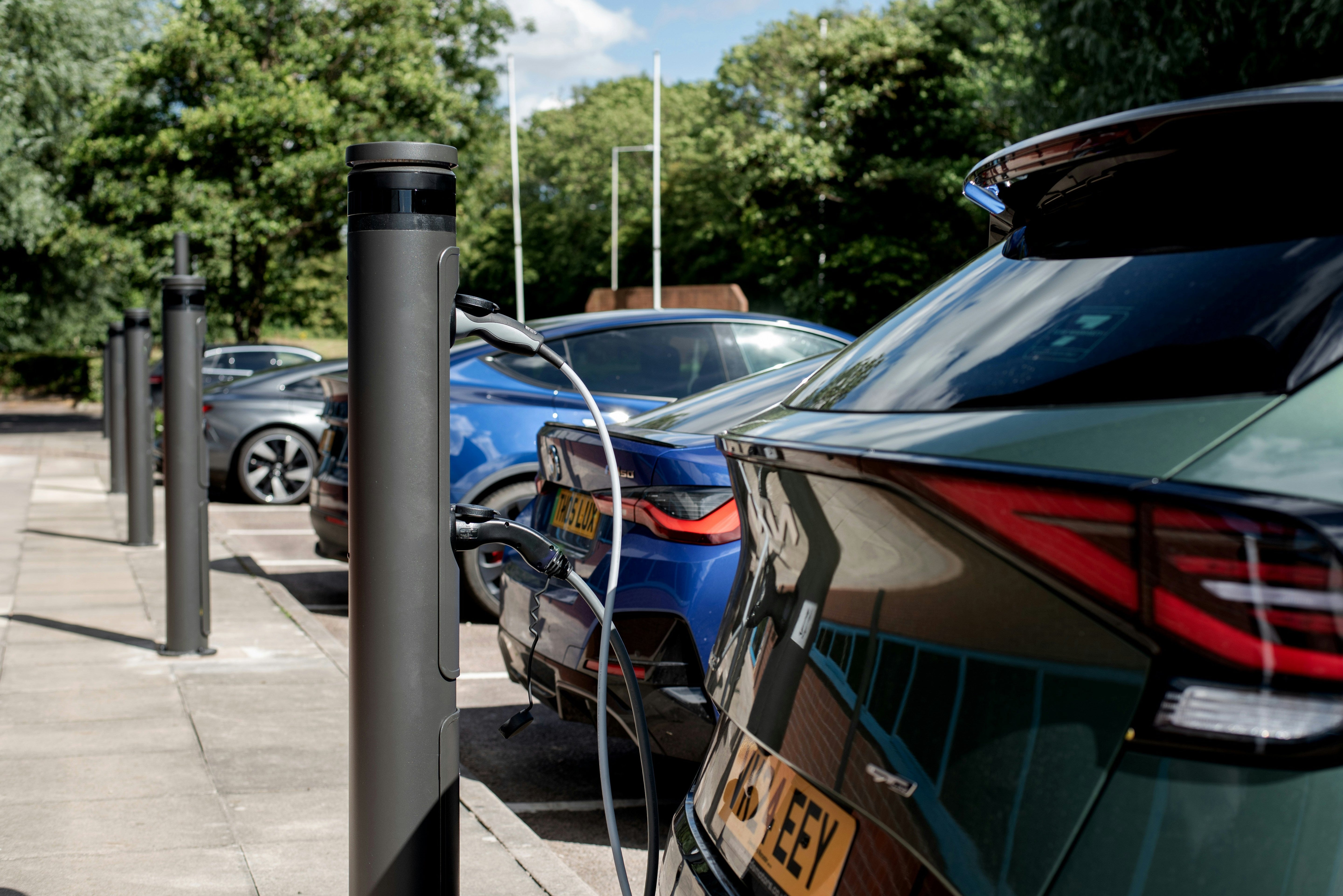
A charging map should tell you more than where the nearest pin is located. Check the connector first. Then review the station’s power, live status, number of available bays and recent driver reports. A site with eight working CCS chargers may be a safer stop than a closer location with one unit and repeated fault reports.
Cable position is easy to overlook. Charging leads on high-power units are thick and often short. A vehicle with its inlet on the opposite side may need to park at an angle or use the neighbouring bay, which is not always possible.
Payment arrangements vary across the UK. Depending on the operator, drivers may use contactless payment, an app, an RFID card or a subscription account. Public chargers covered by UK regulations must display the maximum price in pence per kWh before charging begins, and certain chargers must provide contactless payment.
The electricity tariff is only part of the cost. Some car parks charge an entry fee. Others apply parking restrictions or overstay fees after the charging session ends. Android Auto and Apple CarPlay can make route planning easier when the charging network or navigation app supports them. They do not confirm vehicle compatibility, so the connector and charging data still need to be checked separately.
Can an Adapter Give an Imported Electric Car Access to More Fast Chargers?
A DC adapter can allow a compatible imported car to use EV fast charging stations built around another connector standard. It does not turn an AC-only vehicle into a rapid-charging car. It also cannot raise the maximum DC rate set by the manufacturer.
Consider a Nissan Leaf with a CHAdeMO inlet. A tested CCS2-to-CHAdeMO adapter can connect the vehicle to compatible CCS2 infrastructure. The Leaf will still follow its own battery temperature controls, charging curve and power limit.
The same principle applies to a North American Tesla using NACS or a Chinese-market EV fitted with GB/T. The adapter changes access to charging infrastructure. It does not rewrite the vehicle’s technical specification. DC adapter selection should begin with the exact car, not the connector printed on the product title. Model year, regional software, and charging architecture can affect the communication between the station and vehicle.
EVniculus develops and tests adapters across CCS2, CCS1, CHAdeMO, NACS and GB/T standards. During development of the CCS2-to-CHAdeMO adapter, the team used a Nissan Leaf for more than 100 hours of charging tests and troubleshooting. That process exposed problems that would not appear in a connector diagram, including communication timing, station behaviour and differences between charging networks.
What the UK’s Growing Network Means for EV Drivers
The UK had 119,080 public EV chargers recorded on 1 April 2026. Of those, 27,372 provided 50 kW or more. Those figures improve the chances of finding a charger on a long journey, but the number of units does not describe access equally for every vehicle. CCS-equipped cars can use much of the newer rapid and ultra-rapid infrastructure. Drivers relying on CHAdeMO or an imported connector may have fewer practical options along the same route.
Location data also needs context. A map may count every charging unit at a site, even when some are occupied, offline or fitted with the wrong connector for the car.
Networks such as Shell Recharge combine operator-owned stations with partner locations. Tesla has also opened selected Supercharger sites to other compatible electric cars. Drivers should still check the individual station in the relevant app before changing their route.
Price varies with power, operator and payment method. Zapmap’s UK index for June 2026 reported an average pay-as-you-go price of 54p per kWh for chargers below 50 kW and 79p per kWh for rapid and ultra-rapid units rated at 50 kW or above.
A subscription can reduce the per-kWh rate for frequent users. Some plans allow customers to cancel anytime, but the monthly fee only makes sense when the expected saving exceeds the cost of membership.
A Quick Check Before Your Next Charging Session
|
What to inspect |
What to confirm |
|
Charging inlet |
CCS2, CHAdeMO, NACS, CCS1, GB/T or another standard |
|
DC capability |
Whether the car supports DC charging or AC only |
|
Vehicle power limit |
Maximum DC rate in kW |
|
Charging location |
Correct connector and a working unit |
|
Adapter |
Compatibility with the exact model and production year |
|
Battery |
Suitable temperature and a relatively low state of charge |
|
Payment |
Contactless card, app, RFID card or network account |
|
Extra charges |
Parking limits, entry charges and overstay fees |
A five-minute check at home is usually easier than working through a failed connection beside a charger.
Know Your Car’s Limit Before Choosing a Charger
The number printed on a charging station describes the unit, not the car. Check the inlet, confirm the vehicle’s maximum DC rate and compare both with the charging station before travelling. Battery temperature and state of charge will then determine how close the session comes to the advertised peak.
Imported vehicles need one further check: the charging standard used in their original market. A suitable adapter may open access to more stations, provided it supports the exact vehicle and charging protocol.
When the connector or regional specification is unclear, EVniculus can review the model, production year and charging inlet before you select an adapter.
Frequently Asked Questions About EV Fast Charging
How do I know if my electric car supports DC fast charging?
Inspect the charging inlet and check the official vehicle specification. A CCS, CHAdeMO, NACS or GB/T DC connection indicates that the car has rapid-charging hardware. The specification should also state a maximum DC rate. Use the data for the correct production year, battery version and sales market.
Can every electric vehicle use a 50 kW rapid charger?
No. The vehicle needs a compatible DC port or an adapter designed for its charging system. A car that supports AC charging only cannot use a DC rapid charger. Even a compatible vehicle may draw less than 50 kW when the battery is cold, nearly full or subject to a lower technical limit.
Can a car with a 100 kW limit use a 350 kW charger?
Yes, when the connector and communication protocol are compatible. The car will request up to its own limit rather than taking the full 350 kW. The actual figure may remain below 100 kW during part of the session.
Does a Type 2 port mean the car supports rapid charging?
No. Type 2 is mainly an AC connection. CCS2 uses the Type 2 shape but adds two larger DC contacts beneath it. A vehicle with only the upper Type 2 section may not support DC rapid charging.
Why is my electric car charging more slowly than expected?
Check the battery temperature and state of charge first. A cold battery or a charge level above 80% often reduces power. The station may also be sharing output between bays, controlling cable temperature or operating below its rated capacity.
Can non-Tesla electric cars use Tesla Superchargers?
Some UK Supercharger locations accept other CCS-compatible electric vehicles. The Tesla app identifies participating sites and manages payment. Access should be checked for the individual location because not every Supercharger is open to non-Tesla cars.
Can an adapter make an older electric car charge faster?
No. An adapter can give the car access to another connector standard, but it cannot raise the vehicle’s built-in power limit. Its practical advantage is access to more compatible stations, not a higher peak charging rate.