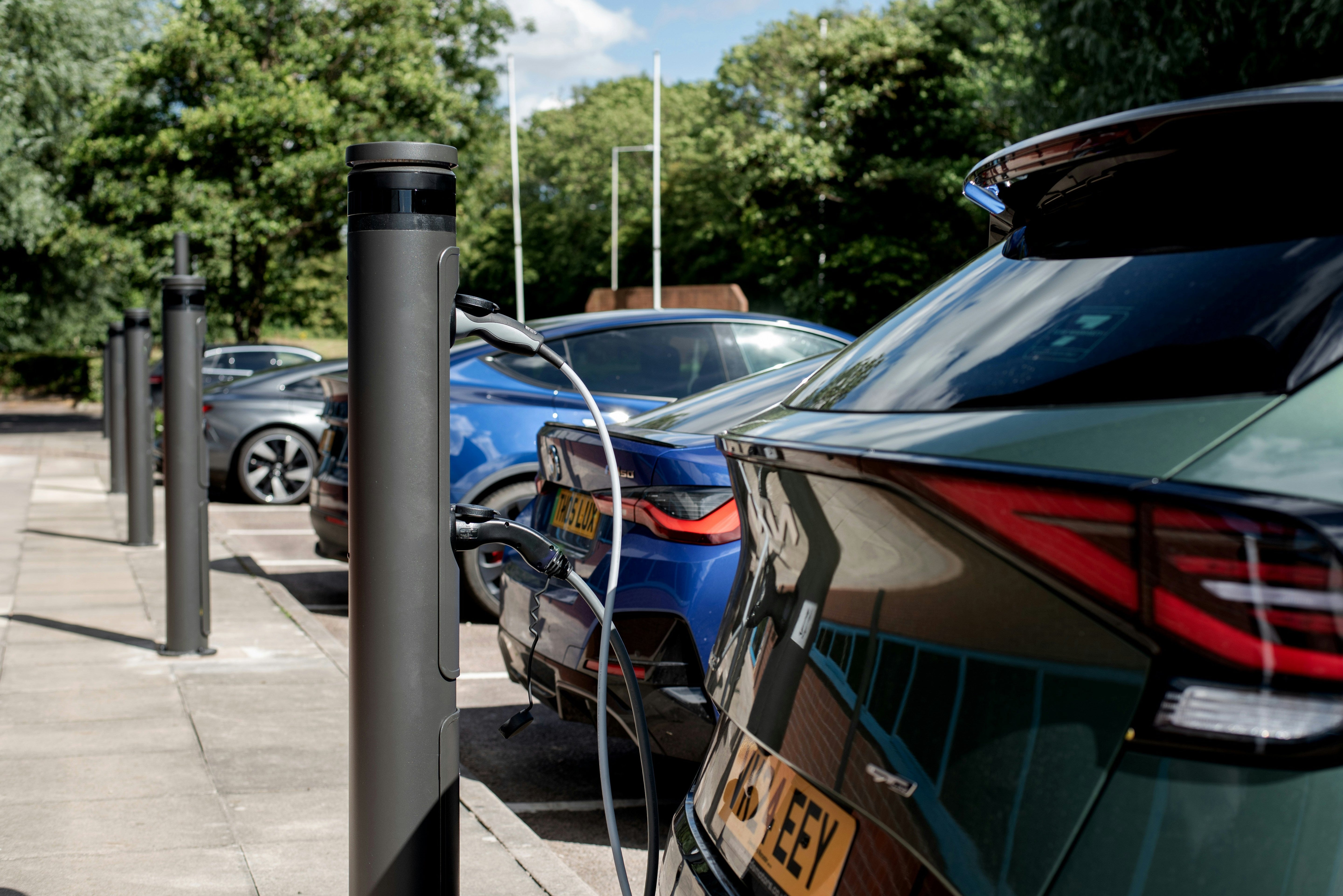

Entonces, ¿qué vehículo eléctrico tiene mayor autonomía? A partir de julio de 2026, es el Lucid Air Grand Touring. En su configuración europea más eficiente, la gran berlina recorre hasta 960 kilómetros en el ciclo WLTP, lo que equivale a aproximadamente 597 millas. El Mercedes-Benz EQS recién actualizado no se queda atrás con hasta 926 km, o aproximadamente 575 millas.
Cifras impresionantes. También vienen con una advertencia sanitaria. Ambas figuras describen una versión específica probada en condiciones controladas. Coloca ruedas más grandes, carga el maletero, sube la calefacción o simplemente conduce más rápido y la distancia real se reduce. A veces por mucho.
Esta guía compara los coches eléctricos de mayor autonomía a la venta en Europa y explica por qué el tamaño de la batería por sí solo no decide la distancia que recorre un coche. Si estás planeando viajes largos o estás comparando un coche de gasolina con uno eléctrico, está escrito para ti. Lo mismo ocurre si solo estás tratando de calcular cuánto alcance realmente necesitas.
¿Qué vehículo eléctrico tendrá la mayor autonomía en Europa en 2026?
Entre los coches eléctricos de producción en serie que se ofrecen en algunas partes de Europa, el Lucid Air Grand Touring es actualmente el EV con mayor alcance. Lucid cita una cifra WLTP de entre 817 y 960 km, según las ruedas y la configuración. El número superior se convierte en aproximadamente 597 millas.
Aquí está lo interesante: Lucid no llegó allí metiendo la batería más grande posible debajo del piso. El Air Grand Touring combina un coeficiente aerodinámico de sólo 0,197 con un consumo de tan solo 13,5 kWh cada 100 km. Funciona con dos motores y tracción total, pero aún así consume menos energía que muchos SUV eléctricos más pequeños.
La carga también es rápida. Conectado a un cargador CC adecuado de 350 kW, el coche puede recuperar hasta 400 km de autonomía WLTP en unos 16 minutos. La cantidad de energía que realmente obtienes depende de la temperatura de la batería, el estado de carga y lo que el punto de carga puede entregar ese día.
Ahora las advertencias. La red de ventas y servicios de Lucid en toda Europa es escasa en comparación con la de Mercedes-Benz, BMW, Audi o Tesla. Y un precio inicial alemán de 130.900 euros sitúa al coche firmemente en territorio de lujo. Llevar la corona de autonomía no lo convierte en el coche eléctrico adecuado para la mayoría de los compradores. Probablemente no lo sea.
Comparación de autonomía de vehículos eléctricos: los coches eléctricos de mayor autonomía
el Comparación de autonomía de vehículos eléctricos A continuación se utiliza la cifra WLTP combinada más alta publicada para cada modelo. No hemos mezclado las cifras de la EPA estadounidense con los resultados del CLTC chino, porque los ciclos de prueba no son comparables.
 Cada figura representa la mejor configuración dentro de su línea de modelo. Las ruedas más grandes, el kit de rendimiento y las versiones con tracción total tienden a derribar el resultado oficial.
La tabla muestra algo más que vale la pena recordar: el vehículo eléctrico de mayor autonomía no es automáticamente el más rápido en un viaje largo. El rango decide con qué frecuencia te detienes. La velocidad de carga y la forma de la curva de carga deciden cuánto dura cada parada.
Lucid Air Grand Touring: gama construida en torno a la eficiencia
Sí, el Lucid lleva una batería grande. Sin embargo, la eficiencia es lo que lo mantiene por delante de otras berlinas premium, y vale la pena desempacar eso.
Su carrocería baja se desliza por el aire mucho más fácilmente que un SUV eléctrico alto. A velocidad de autopista, esto es muy importante, porque la energía necesaria para empujar el aire a un lado aumenta considerablemente cuanto más rápido se avanza.
Lucid también desarrolla internamente sus propios motores compactos, electrónica de potencia y software de gestión de baterías. El Grand Touring envía hasta 611 kW a las cuatro ruedas, pero su mejor consumo WLTP sigue siendo de 13,5 kWh cada 100 km. Esos dos hechos rara vez aparecen en la misma frase.
El resultado es una gran autonomía sin paradas dolorosas. Lucid dice que se pueden agregar hasta 400 km en 16 minutos en condiciones adecuadas. A largo plazo, ese equilibrio entre eficiencia y carga rápida cuenta más que la capacidad bruta de la batería.
El precio sigue siendo el punto conflictivo. Si su kilometraje semanal es normal, rara vez agotará esa batería en un solo viaje. Seguirás cargando con su peso todos los días y habrás pagado generosamente por el privilegio.
Mercedes-Benz EQS se acerca al líder de gama
El último EQS Berlina ha acortado distancias. Mercedes anuncia ahora hasta 926 km con una sola carga, unas 575 millas, además de la posibilidad de sumar hasta 320 km en diez minutos.
Eso deja solo 34 km entre las cifras principales del EQS y el Lucid Air Grand Touring. Aproximadamente 21 millas. No hay mucha luz del día.
Mercedes llega allí por un camino diferente, eso sí. El EQS combina una batería grande con una carrocería larga y resbaladiza y versiones de tracción trasera adaptadas para la comodidad en autopista. Suspensión neumática, cabina silenciosa y tratamiento de lujo completo. Este automóvil está construido para ganar distancia, no para ganar concursos de eficiencia.
Que la ventaja aparezca depende del viaje. En un desplazamiento constante por autopista, su forma suave mantiene bajo control el consumo de energía. Si nos arrastramos por una ciudad, la enorme masa de automóviles y baterías se vuelve más difícil de justificar.
La cifra actualizada también demuestra un punto pequeño pero útil: las comparaciones de vehículos eléctricos necesitan una fecha. Un número EQS más antiguo, de 822 km, todavía circula por Internet y ya no refleja la autonomía máxima anunciada del modelo revisado.
BMW iX3: el SUV eléctrico de mayor autonomía en esta comparación
El iX3 50 xDrive de BMW recorre hasta 805 km según las pruebas WLTP, o 500 millas. En el lanzamiento, BMW lo describió como el vehículo eléctrico de batería de mayor autonomía a la venta en el Reino Unido.
La batería utilizable tiene una capacidad de 108,7 kWh, más que los paquetes instalados en el Mercedes-Benz CLA o el Audi A6 e-tron. Dos motores proporcionan tracción total, con una unidad de alta eficiencia en el eje trasero y otra más pequeña en el eje delantero.
BMW también ha reducido las pérdidas dentro del sistema de propulsión. Según la empresa, su sistema eDrive de sexta generación reduce las pérdidas relacionadas con la conducción en un 40% en comparación con la generación anterior. Ganancias como esa ayudan a compensar la cruda realidad aerodinámica de la carrocería de un SUV.
La carga es donde el iX3 realmente sorprende. Su sistema de 800 voltios acepta hasta 400 kW y puede agregar hasta 372 km de autonomía WLTP, aproximadamente 231 millas, en diez minutos. Una recarga del 10 al 80 % tarda unos 21 minutos en una estación compatible.
En otras palabras, el alcance y la carga van en la misma dirección. Obtendrá una gran reserva de autopista y breves paradas planificadas. Un inconveniente: una estación de 150 kW no puede alimentar al automóvil con sus 400 kW completos, por lo que el beneficio depende de la infraestructura de alta potencia a lo largo de su ruta.
Mercedes-Benz CLA: larga autonomía con una batería más pequeña
El CLA 250+ con tecnología EQ alcanza hasta 792 km en el ciclo WLTP, aproximadamente 492 millas. El consumo combinado puede descender hasta los 12,2 kWh cada 100 km. Sinceramente, la cifra de consumo dice más que la autonomía. El CLA no necesita una carrocería del tamaño de un EQS ni una batería para recorrer 500 millas.
Un motor montado en la parte trasera impulsa las ruedas traseras a través de una transmisión de dos velocidades. La relación más baja favorece la aceleración, mientras que la relación más alta permite que el motor gire más lento durante una conducción más rápida. Un sistema eléctrico de 800 voltios permite que el coche pueda recorrer hasta 325 kilómetros en diez minutos.
Una caja de cambios de dos velocidades añade complejidad mecánica. La mayoría de los coches eléctricos utilizan un único engranaje reductor, ya que los motores eléctricos ya funcionan en una amplia banda de velocidades. Mercedes decidió claramente que la ganancia de eficiencia en distintas velocidades justificaba las piezas adicionales.
La lección más amplia del CLA es simple. Una batería más pequeña puede ofrecer una autonomía similar a una más grande, porque la altura, el peso, la aerodinámica, las pérdidas del inversor y la eficiencia del motor determinan la rapidez con la que desaparece la energía almacenada.
Audi A6 e-tron: autonomía y carga en una forma ejecutiva convencional
El Audi A6 Sportback e-tron performance ofrece hasta 776 km de autonomía combinada WLTP, o 482 millas. Utiliza un único motor eléctrico montado en la parte trasera y una batería utilizable de 94,9 kWh.
La plataforma de 800 voltios de Audi admite carga de CC de hasta 270 kW. En las condiciones adecuadas, el coche recorre 310 km en diez minutos y sube del 10% al 80% en unos 21 minutos.
Observe qué versión lidera la alineación: el modelo de alto rendimiento con tracción trasera, no el quattro con tracción total. Audi enumera el quattro con hasta 730 km, frente a los 776 km del monomotor. Un segundo motor compra tracción y potencia. También cuesta peso y pérdidas eléctricas.
El frenado regenerativo se encarga de gran parte de la desaceleración rutinaria y devuelve parte de esa energía cinética a la batería. Audi calcula que la recuperación cubre alrededor del 95% de las frenadas diarias. Lo que regresa siempre es menos de lo que entró durante la aceleración, pero está lejos de ser nada.
Tesla Model 3 de largo alcance: 466 millas en una berlina más pequeña
El sitio web de Tesla en el Reino Unido enumera el Model 3 con un alcance de hasta 466 millas WLTP, equivalente a aproximadamente 750 km. Eso lo coloca por debajo del Lucid, el EQS, el iX3, el CLA y el A6 e-tron en rango absoluto. Sin embargo, una categoría diferente. El Model 3 es una berlina más pequeña, no un gran coche de lujo ni un SUV familiar.
La receta sigue un patrón de eficiencia familiar: batería de largo alcance, tracción trasera, un motor. Un solo motor pesa menos y desperdicia menos que una configuración de tracción total centrada en el rendimiento.
Luego está la red Supercharger, que todavía pertenece a cualquier cálculo de larga distancia. El alcance cubre los espacios entre paradas. Que la ruta parezca fácil depende de la disponibilidad y confiabilidad del cargador una vez que llegue.
Dicho claramente, no necesita la batería más grande si hay cargadores confiables en su ruta. Puede ser menos estresante vivir con un automóvil de 466 millas con carga predecible que con un rival de piernas más largas vinculado a una red más irregular.
Peugeot E-3008 Long Range: gama SUV eléctrica convencional
El E-3008 Long Range de Peugeot cubre hasta 700 km según las pruebas WLTP, unas 435 millas. Utiliza una batería utilizable de 96,9 kWh y un único motor eléctrico de 170 kW que impulsa las ruedas delanteras.
Aquí no se publica la cifra más alta de SUV. El BMW iX3 viaja más lejos y carga más rápido. Lo que le da al Peugeot su lugar es el posicionamiento: se trata de un SUV familiar convencional, no de una declaración premium.
La carga máxima de CC se estima en 160 kW. Una sesión del 20% al 80% dura aproximadamente 27 minutos, y diez minutos con el enchufe añaden unos 150 km cuando las condiciones cooperan. También se incluye el preacondicionamiento de la batería, que calienta la batería antes de la carga rápida en climas fríos. En un viaje largo en invierno, eso realmente importa, porque una batería fría acepta menos energía al comienzo de una sesión.
El E-3008 establece el equilibrio honestamente. Una batería grande significa menos paradas. Recargarlo simplemente lleva más tiempo que en un BMW iX3, CLA o Audi A6 e-tron de 800 voltios.
¿Qué factores de autonomía de los vehículos eléctricos son más importantes?
Los principales factores de autonomía de los vehículos eléctricos son la capacidad utilizable de la batería, la eficiencia energética, la aerodinámica, la velocidad, la temperatura, la configuración de la transmisión, las ruedas, el peso del vehículo y el estilo de conducción. Ninguno de ellos actúa solo. Se unen.
Capacidad utilizable de la batería
Los anuncios de baterías pueden indicar capacidad bruta o utilizable, y la diferencia es importante. La capacidad bruta es todo lo que contiene físicamente la mochila. La capacidad utilizable elimina los buffers que el sistema de gestión de baterías reserva en la parte superior e inferior.
Esos amortiguadores evitan que las células permanezcan completamente llenas o completamente vacías durante períodos prolongados, lo que no toleran bien. Dos automóviles con tamaños de batería aparentemente similares pueden ofrecer cantidades de energía notablemente diferentes para la conducción real.
Una mayor capacidad utilizable generalmente significa más alcance. También significa más peso, más costo y más tiempo en el cargador. Llevar una batería que nunca usas hace que cada milla ordinaria sea un poco menos eficiente.
Consumo de energía
El método del reverso de un sobre: dividir la energía utilizable por el consumo.
Un coche con 100 kWh disponibles y una media de 20 kWh cada 100 km tiene una autonomía teórica de unos 500 km. Si se reduce el consumo a 15 kWh cada 100 km, la misma energía se extiende hasta aproximadamente 667 km.
Esa suma única explica cómo una berlina eficiente puede igualar o superar a un SUV eléctrico que lleva una batería similar.
Aerodinámica y velocidad en autopista.
A gran velocidad, la resistencia del aire se hace cargo. Una berlina baja como el Lucid Air, el Mercedes CLA o el Audi A6 e-tron necesita menos energía para mantener el ritmo en autopista que un SUV alto.
La velocidad en sí también es brutal. Conducir a 130 km/h consume mucha más batería que estar sentado a 100 km/h, y la diferencia puede compensar lo que se ahorre acelerando con cuidado en ciudad.
Versiones monomotor y tracción total
Dentro de la mayoría de las gamas de vehículos eléctricos, la versión de tracción trasera de un solo motor presenta la autonomía oficial más alta. Agregue un segundo motor y obtendrá tracción y rendimiento, pero aumentará las pérdidas de peso y transmisión.
El software suaviza el golpe desconectando o limitando un motor cuando no es necesario. Aun así, la variante de alto rendimiento con tracción total casi siempre recorre menos distancia que su hermana de un solo motor.
Ruedas, neumáticos y carga del vehículo.
Las ruedas grandes y los neumáticos anchos aumentan la resistencia a la rodadura y perturban el flujo de aire alrededor del coche. El mismo modelo con llantas aerodinámicas de 19 pulgadas puede ofrecer una autonomía oficial notablemente mayor que con llantas de alto rendimiento de 21 pulgadas.
Los pasajeros y el equipaje también aumentan el consumo de energía, sobre todo durante aceleraciones repetidas y en rutas montañosas. El efecto es menor que la velocidad o la temperatura, aunque un coche muy cargado lo demostrará.
Frenado regenerativo
El frenado regenerativo convierte parte del movimiento del automóvil en electricidad a medida que reduce la velocidad. Se gana su presencia en la ciudad y en rutas con frecuentes cambios de velocidad.
No puede recuperar todo lo que gastó al acelerar y no cancela el costo de subir colinas. Mantener una velocidad suave y constante es mejor que acelerar con fuerza y esperar que la regeneración salde la cuenta más adelante.
Estado de la batería
Las baterías envejecen. La capacidad utilizable se reduce gradualmente, a un ritmo determinado por la química, la exposición a la temperatura, los hábitos de carga y el kilometraje.
Por lo tanto, un vehículo eléctrico usado puede recorrer menos distancia que uno nuevo idéntico, incluso cuando ambas pantallas muestran 100%. Si compra una batería de segunda mano, un informe del estado de la batería le indicará mucho más de lo que podría indicarle el odómetro.
Por qué el alcance WLTP no es el mismo que el alcance del mundo real
WLTP es un procedimiento de laboratorio establecido según las normas de la UE. Mide el uso de energía y la autonomía del vehículo en condiciones repetibles, ofreciendo a los compradores una forma estandarizada de comparar un coche eléctrico con otro.
Lo que no es es un pronóstico para su viaje del martes. La autonomía en el mundo real varía con la velocidad, el viento, el tráfico, la elevación, la temperatura, la presión de los neumáticos y lo que sea que esté haciendo el control climático. El equipamiento también importa. El resultado principal del WLTP puede aplicarse solo a una combinación particular de rueda y acabado.
Si conduce con suavidad por carreteras llanas en verano, es posible que supere la cifra oficial. Si tomas el mismo coche por una autopista fría y mojada con la calefacción funcionando al máximo, aterrizarás muy por debajo.
Los estándares de prueba también difieren según la región. Los resultados de la EPA utilizados en Estados Unidos no son intercambiables con las cifras WLTP europeas, y los valores CLTC publicados en China siguen otro perfil. Una comparación significativa mantiene a todos los vehículos dentro del mismo ciclo.
En EVniculus, tratamos WLTP como una herramienta de comparación más que como una promesa. Nos indica qué vehículo es más eficiente bajo el mismo procedimiento. La planificación de rutas todavía necesita un margen para el mundo real.
Cómo el clima frío y una bomba de calor afectan la autonomía de los vehículos eléctricos
El frío golpea dos veces a un coche eléctrico. La batería funciona con menos ganas y el habitáculo exige calor.
Las celdas de iones de litio funcionan de manera menos eficiente a bajas temperaturas. El automóvil puede gastar energía calentando el paquete, mientras que el sistema de calefacción consume energía que de otro modo haría girar las ruedas.
Una bomba de calor alivia la tensión al mover el calor en lugar de producirlo todo a través de una resistencia eléctrica. En una prueba del Departamento de Energía de EE. UU., un vehículo equipado con bomba de calor utilizó un 38 % menos de energía HVAC a -6,7 °C que el vehículo de comparación con calentador de resistencia en las condiciones de prueba indicadas. Eso no se traduce en una bonificación de alcance fijo por cada vehículo eléctrico. Muestra por qué la tecnología de calefacción merece una línea en la hoja de especificaciones.
El acondicionamiento previo también ayuda. Calentar la cabina y la batería mientras el automóvil aún está enchufado preserva la energía almacenada para el viaje en sí, y el Departamento de Energía recomienda hacer exactamente eso donde el vehículo lo soporta.
Agregue neumáticos de invierno, lluvia y aire frío más denso y la resistencia aumentará aún más. Cualquiera que planee millas regulares de autopista en invierno no debería comprar basándose únicamente en la cifra máxima WLTP.
¿Cuánta autonomía necesita para conducir largas distancias?
He aquí una opinión pasada de moda: la mayoría de los conductores no necesitan el coche eléctrico con la autonomía máxima más alta.
Comience con el viaje más largo que realice regularmente, no con el viaje excepcional que realiza una vez al año. Luego, observe dónde está disponible la carga a lo largo de esa ruta y cuánta autonomía tiene realmente con el nivel de carga que utiliza en la conducción diaria.
Alguien que recorra 60 km al día y cargue en casa todas las noches gana poco con 600 km de autonomía en autopista en el mundo real. La batería de gran tamaño infla el precio de compra y el peso en vacío sin cambiar ni un ápice la rutina semanal.
Para viajes largos, la velocidad de carga puede ser tan importante como la autonomía. Un coche que recorre 500 km antes de detenerse pero que necesita 45 minutos para recargarse puede terminar el recorrido más tarde que uno que recorre 420 km y carga en 20 minutos.
Por lo tanto, verifique el tiempo del 10 al 80 %, no solo el encabezado de kW pico. Compruebe si el coche preacondiciona su batería cuando navega con un cargador rápido. Y estudie la infraestructura de carga en las rutas por las que conduce, no en un mapa de todo el continente.
Deja también un margen de invierno. Llegar a un punto de recarga con un 10-15% restante te da margen para un desvío, una plaza ocupada o un consumo superior al esperado.
Preguntas frecuentes sobre la autonomía de los vehículos eléctricos
¿Qué vehículo eléctrico tiene la mayor autonomía en Europa?
En julio de 2026, el Lucid Air Grand Touring tiene la autonomía WLTP anunciada más larga entre los coches eléctricos de producción en serie que se ofrecen en algunas partes de Europa. Alcanza hasta 960 km, aproximadamente 597 millas, según la configuración.
¿Qué SUV eléctrico tiene mayor autonomía?
Entre los modelos comparados aquí, el BMW iX3 50 xDrive lidera a los SUV con hasta 805 km o 500 millas WLTP. También admite carga de CC de hasta 400 kW, algo poco común en esta clase.
¿Es preciso el rango WLTP?
Es precisa como comparación estandarizada entre vehículos probados bajo el mismo procedimiento. No predice el rango exacto que verá en su clima, su tráfico o sus carreteras.
¿Una batería más grande siempre produce más autonomía?
No. Una mayor capacidad utilizable ayuda, pero la eficiencia puede cambiar el resultado. La aerodinámica, el peso, la configuración del motor, las pérdidas del inversor, las ruedas y la velocidad de conducción determinan la rapidez con la que se agota la energía almacenada.
¿Cuánta autonomía pierde un coche eléctrico con tiempo frío?
No existe un porcentaje fijo que se ajuste a todos los vehículos eléctricos. La química de las baterías, la gestión térmica, la tecnología de calefacción y la severidad del clima influyen en las pérdidas. Los viajes cortos suelen mostrar una caída porcentual mayor, porque el coche recalienta repetidamente el habitáculo y la batería cuando está frío.
¿La tracción total reduce la autonomía de los vehículos eléctricos?
A menudo lo hace. Un segundo motor eléctrico añade peso y pérdidas eléctricas. Algunos fabricantes limitan el impacto desconectando o restringiendo el motor delantero cuando no es necesario.
¿Es la velocidad de carga más importante que la autonomía máxima?
Para viajes largos y frecuentes, puede serlo. 30 o 40 millas adicionales podrían ahorrar una parada en una ruta particular, mientras que un tiempo más rápido entre un 10 y un 80 % acorta cada parada. El equilibrio adecuado depende de tus viajes habituales y de la red de carga que utilices.
El alcance más largo es sólo una parte del viaje
El Lucid Air Grand Touring encabeza actualmente las cifras europeas con hasta 960 km WLTP, con el nuevo Mercedes-Benz EQS pisándole la cabeza. El BMW iX3, el Mercedes CLA, el Audi A6 e-tron y el Tesla Model 3 demuestran que otros estilos de carrocería y niveles de precios también pueden acercarse o superar los 750 km en las pruebas oficiales.
El tamaño de la batería explica sólo una parte de la historia. La aerodinámica, la eficiencia del motor, el diseño de la transmisión, los neumáticos, la temperatura y la velocidad deciden hasta dónde llega realmente la energía almacenada al coche.
Si recorres largas distancias, la pregunta más importante no es qué coche llega más lejos en el papel. Se trata de si el vehículo combina suficiente autonomía en el mundo real con paradas de carga cortas y acceso confiable a estaciones compatibles.
EVniculus ayuda a los propietarios de vehículos eléctricos europeos e importados a comprender los estándares de carga, la compatibilidad de los conectores y el equipo que realmente pueden utilizar sus automóviles.
Fuentes de información
- Lucid Air Grand Touring, especificaciones europeas, Lucid Motors
- La nueva berlina eléctrica EQS, autonomía y carga, Mercedes-Benz
- El comienzo de una nueva era: el nuevo BMW iX3, BMW Group PressClub
- El nuevo CLA es coronado Coche del Año 2026, Grupo Mercedes-Benz
- Audi A6 Sportback e-tron, Datos técnicos, Audi MediaCenter
- Model 3, berlina deportiva eléctrica, Tesla Reino Unido
- Nuevos Peugeot E-3008 y E-5008 Largo Alcance, Stellantis Media
- Procedimiento de prueba armonizado a nivel mundial para vehículos ligeros, EUR-Lex
- Impacto de las temperaturas ambiente frías en el rendimiento de los BEV, Departamento de Energía de EE. UU.