BYD Electric Vehicles
BYD’s electric story began not with a car, but with the battery that powers it. From that starting point, the company developed its own motors, semiconductors and vehicle platforms, creating an unusually integrated approach to electric mobility. What started in China now supports a European range spanning compact city cars, family SUVs, executive saloons and seven-seat models.
From the DOLPHIN and ATTO lines to the SEAL, SEALION 7 and TANG, each BYD electric car answers a different combination of space, range and driving needs. The brand also offers DM-i plug-in hybrids for drivers who want to complete regular journeys on electric power while retaining a petrol engine for longer distances. European models normally use Type 2 and CCS2 charging connections, while vehicles imported from China may retain GB/T ports and require different charging equipment.
BYD SEAL
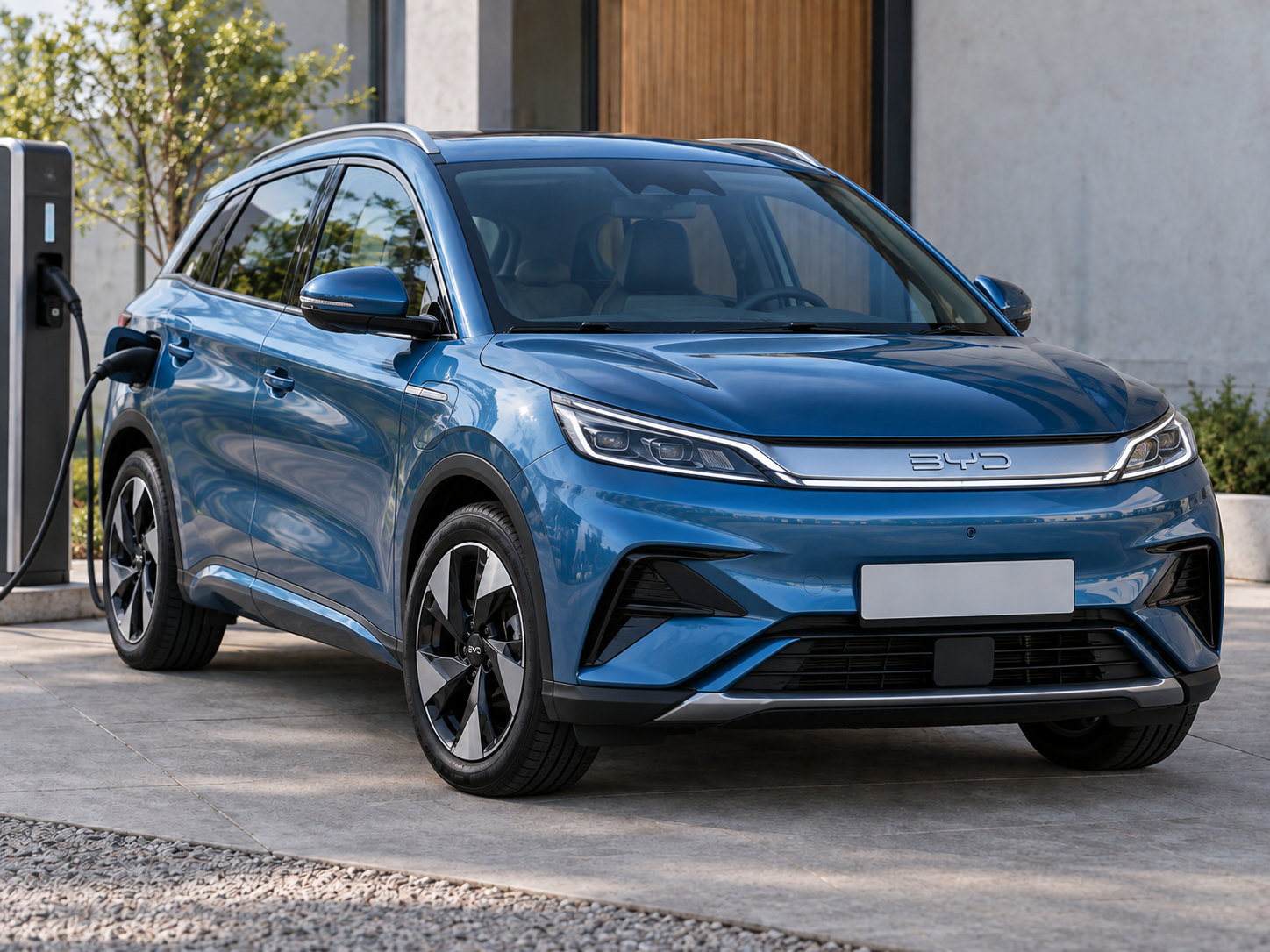
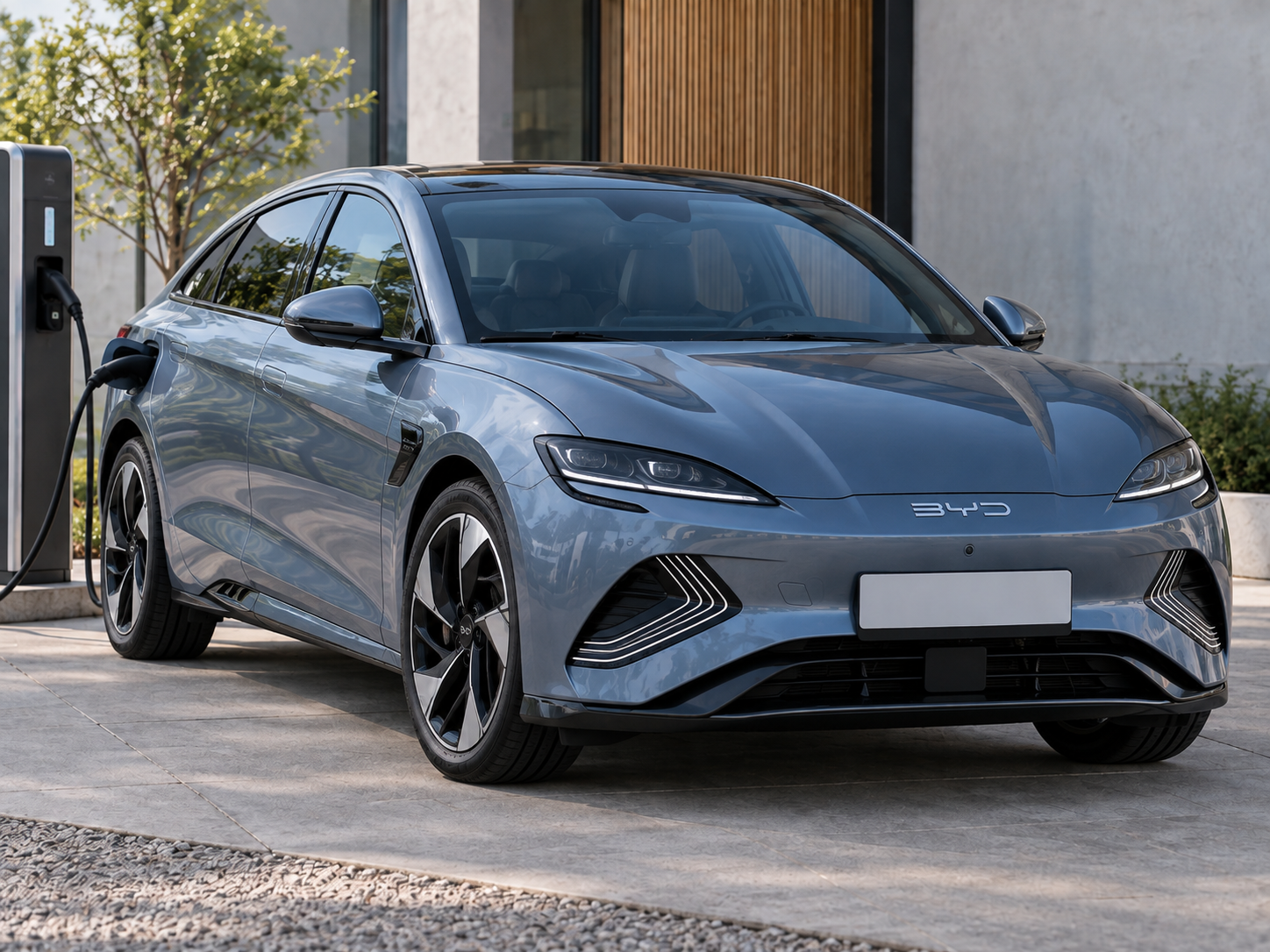
Why Choose a BYD Electric Car?
BYD develops many of the systems used in its electric vehicles rather than treating the battery, motor and control electronics as unrelated components. Its manufacturing operations cover batteries, electric motors, power electronics and automotive semiconductors. This vertical integration gives the company closer control over vehicle architecture, production and the development of new technology.
The Blade Battery is one of the clearest results of that approach. It uses lithium iron phosphate chemistry, commonly abbreviated to LFP, and does not rely on nickel or cobalt. Its long, narrow cells are arranged to make better use of the available space within the battery pack, supporting cabin room and structural strength as well as energy storage.
Safety has also influenced the battery’s design. During BYD’s nail-penetration testing, the Blade Battery did not catch fire or enter thermal runaway. The test recreates severe internal damage by driving a metal nail through a charged battery cell, creating a direct internal short circuit.
The e-Platform 3.0 brings the battery, powertrain and electronic control systems together within an architecture created specifically for electric cars. It can support front-, rear- and all-wheel-drive layouts, several motor configurations and both 400-volt and 800-volt electrical systems. These are platform capabilities rather than specifications shared by every model, so the details of the individual vehicle still need to be checked.
Many BYD interiors are organised around a large central infotainment display, although its size and functions differ by model and trim. High-voltage battery warranty cover also varies according to the original market, vehicle age and local terms. Owners should consult the documentation supplied with the car or an authorised retailer when confirming the remaining cover.
BYD EV Charging Made Simple
Most European BYD electric cars use a Type 2 connection for AC charging. This is the standard normally used at home, at work and at public destination chargers where the vehicle may remain parked for several hours.
A dedicated home charging point is usually the most practical option for regular use. It allows drivers to charge the car overnight, schedule sessions around their routine and, where the electricity tariff permits, use cheaper off-peak energy.
Type 2 charging equipment can support power levels of up to 22 kW, but the rating printed on the charger is only one part of the calculation. The car’s onboard AC charger sets its own limit. Connecting a vehicle that can accept 11 kW to a 22 kW unit will not make it charge at twice the supported rate.
Power and energy are also measured differently. Kilowatts describe how quickly electricity is being supplied, while kilowatt-hours show how much energy can be stored in the EV’s battery. In ideal conditions, an 11 kW charger can supply up to 11 kWh in one hour if the vehicle supports that rate. Some energy is lost during the charging process, so the amount reaching the battery will be slightly lower.
BYD EV Charger Options and Compatibility
The right EV charging equipment depends on four practical details: the vehicle’s charging port, maximum supported power, electrical supply and normal driving routine. Checking all four prevents a physically compatible charger from becoming an unnecessarily expensive or underused installation.
Choosing a BYD Charging Cable
A BYD charging cable for a European-market model will normally have a Type 2 connector at both ends. One end connects to the car and the other to an untethered home or public AC charging point.
EVniculus offers Type 2 cables in several lengths and power ratings. A longer cable can be useful in public car parks, hotels and shared residential locations where the charging socket is not always positioned beside the vehicle inlet. The cable should still be stored carefully so that it remains clean and does not become a trip hazard.
Charging speed is restricted by the lowest-rated part of the connection. A 22 kW cable can work with a vehicle that accepts less power, but it cannot increase the limit set by the car or station. Choosing the correct rating therefore supports compatibility without creating unrealistic expectations about charging speeds.
Choosing a BYD Home Charger
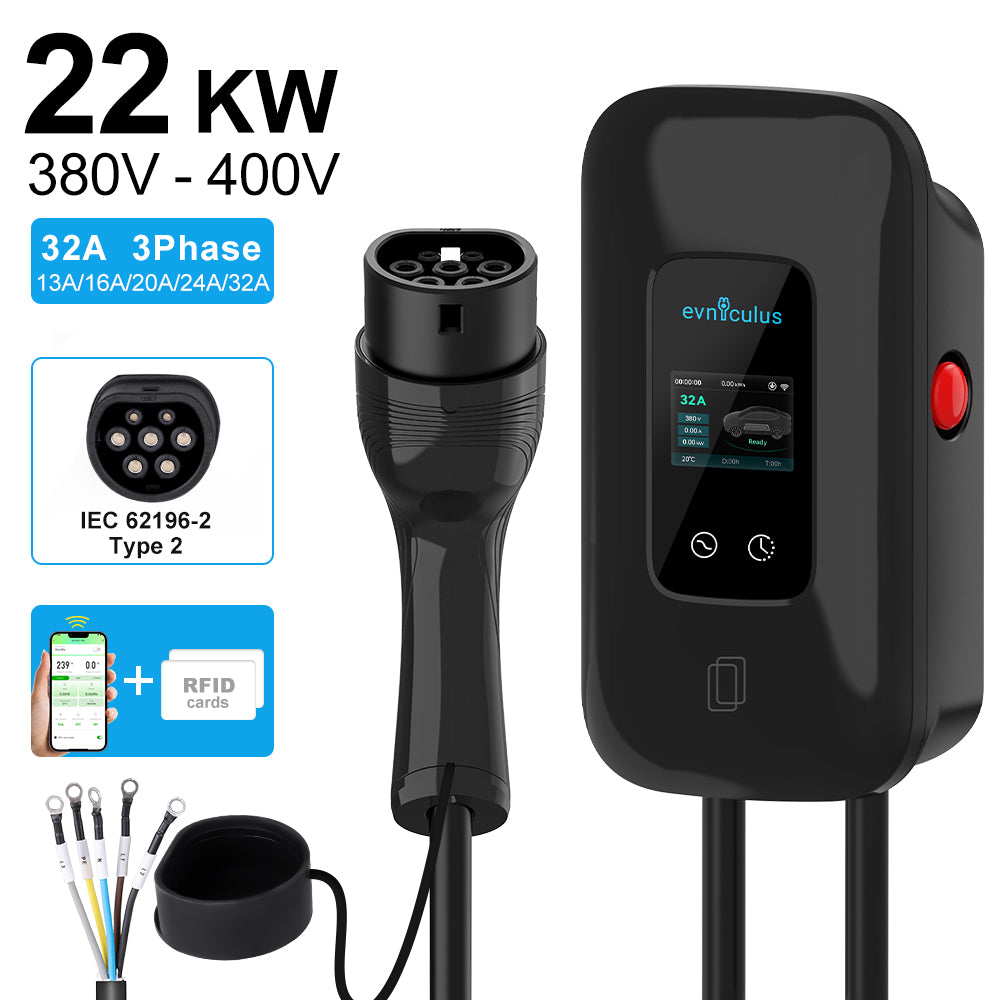
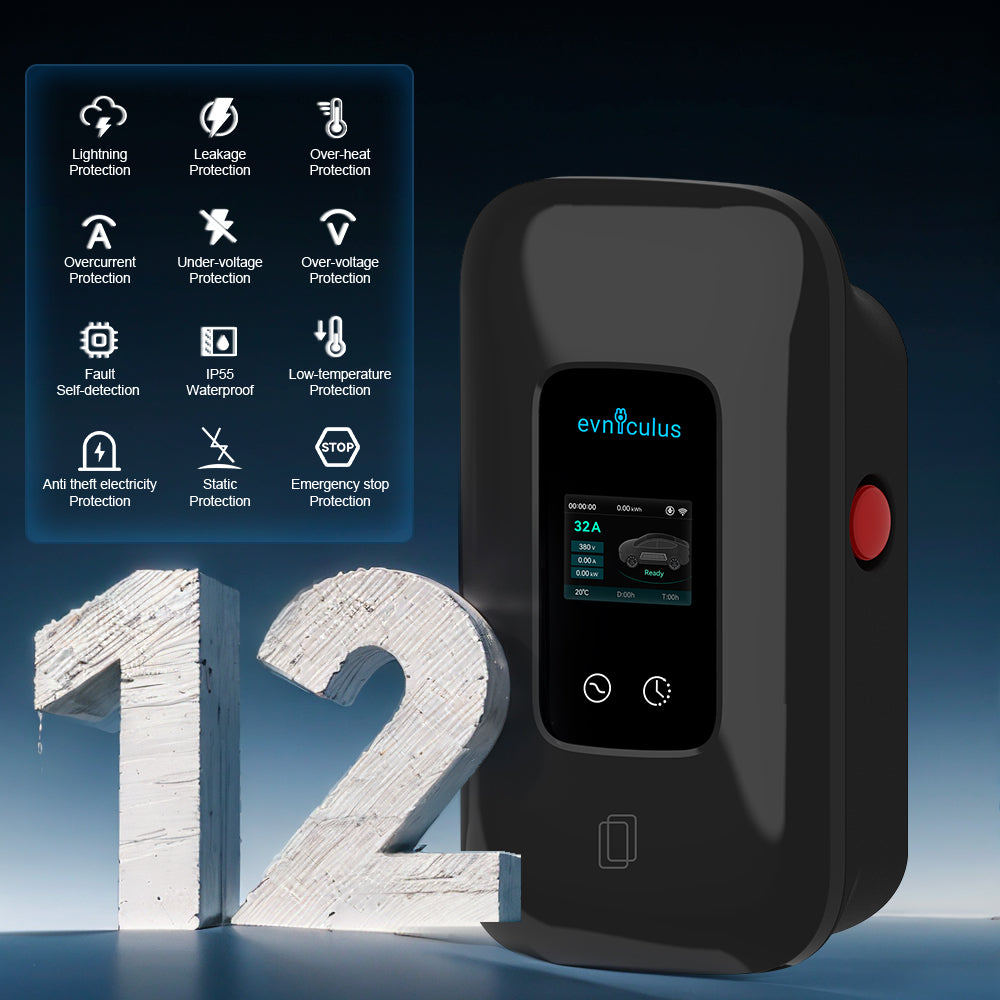
A wall-mounted home charger provides a permanent charging point for everyday use. Smart functions may allow drivers to schedule sessions, monitor energy consumption or control access through an app or RFID card.
A 7 kW unit is commonly used with a suitable single-phase supply, while 11 and 22 kW chargers normally require three-phase electricity. The building’s available capacity, protective equipment and cable installation must be assessed before the charger is fitted. A qualified professional should complete the installation and confirm that the circuit can support a continuous load.
Equipment described as a BYD charging station is not necessarily designed for one model alone. Compatibility is determined by the connector, electrical specification and communication standard rather than the badge on the car. The same wallbox may suit several BYD models, although each vehicle will continue to observe its own maximum AC input.
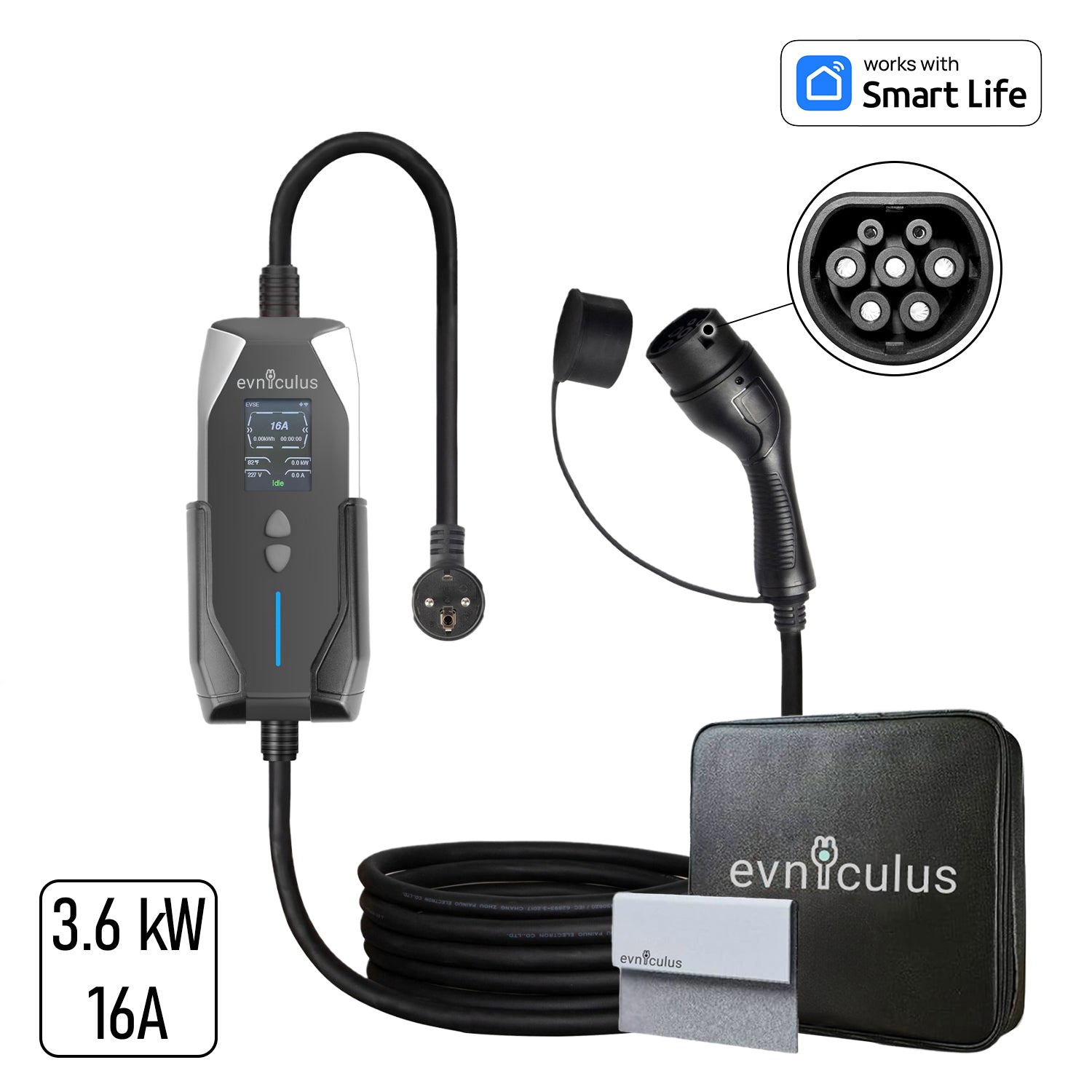
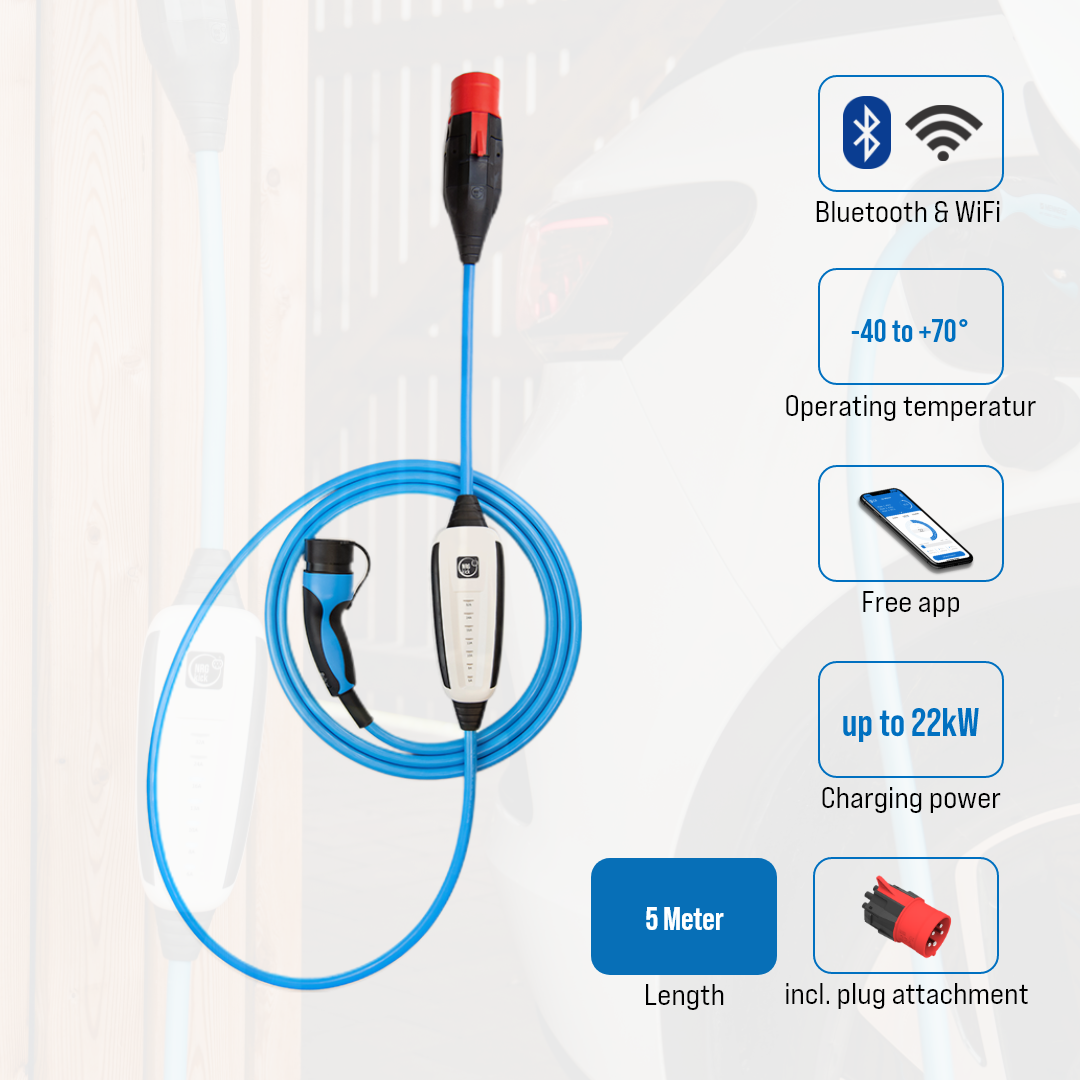
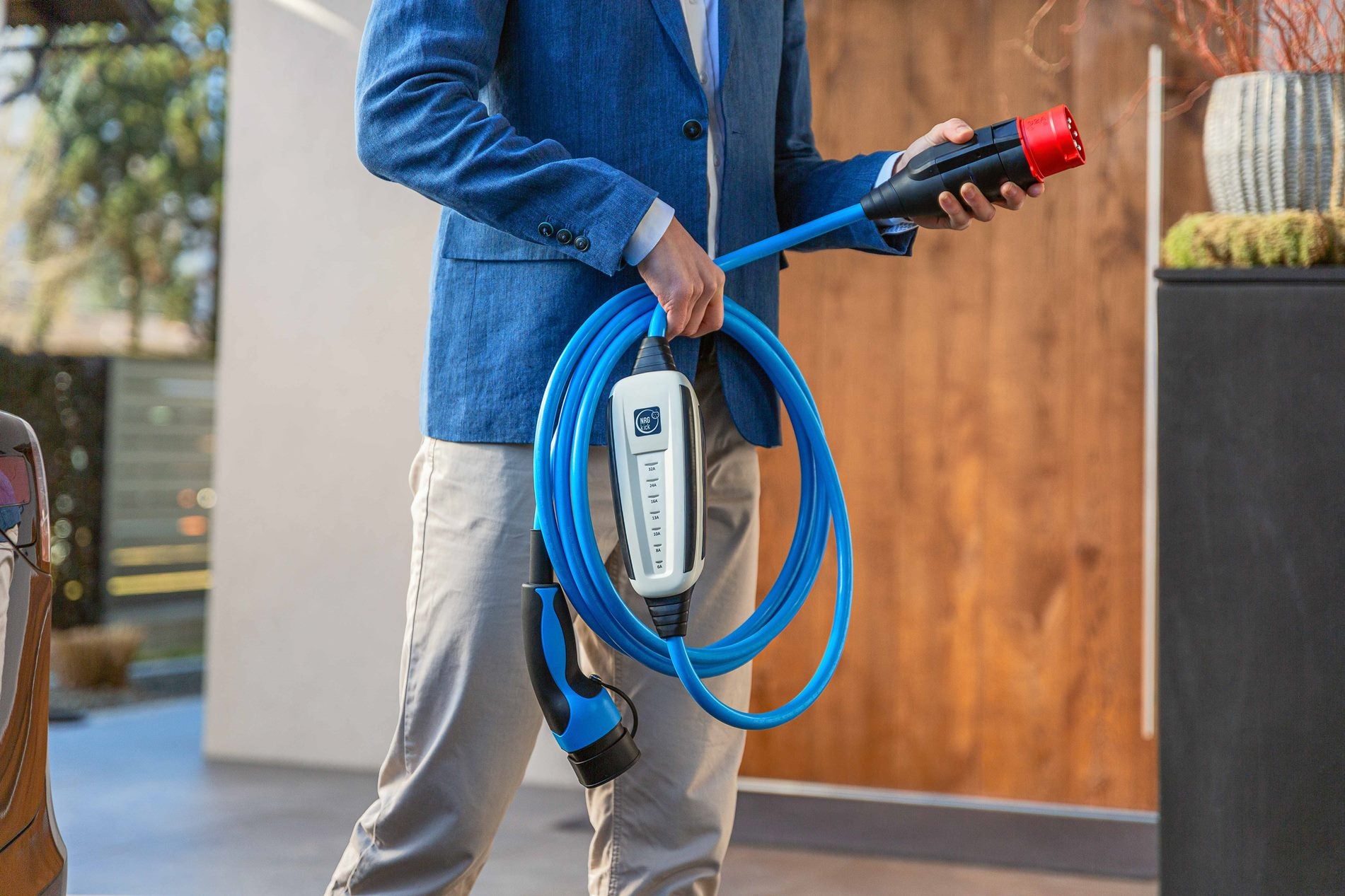
Portable EV chargers offer another option when the car needs to connect to an appropriate domestic or industrial socket. They can be helpful while travelling or at locations without a permanent wallbox, but the available socket and wiring must be suitable for prolonged charging.
Public Charging Stations and Rapid Chargers for BYD
Public AC charging stations are often found at workplaces, hotels, shopping centres, residential developments and municipal car parks. Some have an attached cable, while untethered units require drivers to use their own Type 2 cable.
Access and payment differ between providers. A session may begin through a mobile app, RFID card or contactless terminal, and some chargers allow the driver to tap a bank card without creating an account. Before walking away, it is worth checking the vehicle or station display to make sure that charging has started correctly.
The provider may calculate the payment according to the energy supplied, the time connected or a combination of both. Any parking conditions should be checked separately, particularly where the charger is located in a private car park.
European BYD battery-electric models normally use CCS2 for DC charging. A CCS2 connector combines the upper part of the Type 2 inlet with two larger DC contacts below it, allowing the charging station to supply energy directly to the battery without using the car’s onboard AC charger.
BYD Fast Charging and Charging Speeds
Some CCS charging systems are rated at up to 350 kW, but station output should not be confused with the amount of power a particular vehicle can receive. BYD fast charging performance remains limited by the car’s battery, electrical architecture and battery-management system.
The rate also changes during the session. Battery temperature, state of charge, ambient conditions and the number of vehicles sharing the station’s available power can all influence the result. The highest advertised speed is normally achieved during only part of the charging curve.
As the battery approaches a high state of charge, the vehicle gradually reduces the power it accepts. On a longer journey, charging to around 80% and continuing along the route can therefore be quicker than waiting for the battery to become nearly full at every stop.
An ultra-rapid charger may still benefit a BYD that cannot use its complete output, particularly if the station can maintain the vehicle’s maximum supported rate. It will not, however, override the technical limit programmed into the car.
Flash Chargers and Ultra-Rapid Charging
BYD’s Flash Charging technology extends considerably beyond the output of conventional rapid chargers. In March 2026, the company presented a system capable of supplying up to 1,500 kW through a single connector.
Under BYD’s stated test conditions, a compatible Blade Battery 2.0 vehicle could charge from 10% to 70% in five minutes and from 10% to 97% in nine minutes. The system is designed to shorten the charging process to a period closer to a conventional refuelling stop.
At the time of the announcement, BYD reported that 4,239 Flash Charging stations had been installed in China, with a target of 20,000 by the end of 2026 and an overseas rollout planned for the future.
These figures apply only when a compatible Blade Battery 2.0 vehicle is connected to the dedicated Flash Charging hardware. They do not describe the charging speeds of every existing BYD model or a standard CCS2 station in Europe.
Driving Range, Charging Speeds and the EV’s Battery
Battery capacity is important, but it does not determine driving range on its own. Vehicle weight, body shape, road speed, wheel size, weather, cabin temperature and the number of passengers all affect how efficiently stored energy is used.
A compact electric car used mainly in town will consume energy differently from a larger SUV travelling at motorway speed. Cold weather may increase the energy needed to warm the cabin and battery, while sustained high-speed driving creates greater aerodynamic resistance. Carrying a full passenger and luggage load also changes consumption.
Official range figures remain useful when comparing vehicles tested under the same procedure, but they cannot predict the result of every journey. Electric car drivers usually obtain a more realistic estimate by looking at their recent consumption and the conditions expected along the route.
Someone moving from a petrol or diesel car does not need to reproduce the habit of waiting until the energy supply is almost empty. An electric vehicle can receive smaller and more frequent charges while parked at home, at work or during a planned stop.
On longer journeys, the charging curve can matter as much as total battery capacity. A vehicle that maintains a useful charging rate across a wider part of the battery may complete a route more efficiently than one that reaches a higher peak for only a short period.
Charging a BYD Plug-in Hybrid
A BYD plug-in hybrid combines an electric motor and rechargeable battery with a petrol engine. Its battery is smaller than the pack used in a fully electric car, which changes both its electric range and charging requirements.
Owners can plug in hybrid models at home through compatible Type 2 equipment and use the stored energy for regular local journeys. Frequent charging is central to obtaining the intended benefit from the electric system. If the battery is rarely charged, the vehicle will rely more heavily on its petrol engine.
DC rapid charging is not available on every plug-in hybrid specification. Some models may support it, while others are designed mainly for AC charging at home or at a destination. The exact vehicle inlet and maximum accepted power should be confirmed before choosing a cable, portable charger or wallbox.
A higher-powered home charger will not necessarily shorten the session if the hybrid’s onboard charger has a lower limit. Since the battery is smaller, an appropriately matched AC unit may still complete a full charge within a practical period.
Charging a BYD Imported from China
A BYD manufactured for the Chinese market may use GB/T rather than the Type 2 and CCS2 standards found on European vehicles. The model name does not reveal this difference, and a European cable cannot be assumed to work simply because the car is now registered in Europe or the UK.
AC and DC charging require separate solutions. A Type 2 to GB/T adapter allows a compatible Chinese-market vehicle to connect to European Type 2 AC stations. EVniculus offers single-phase and three-phase variants, with the final rate limited by the adapter, car and charging point.
DC charging involves more than joining two physical connectors. A CCS2 to GB/T adapter must also manage communication between the European charging station and the vehicle. Without this exchange of information, the charging process will not begin.
The EVniculus CCS2 to GB/T adapter includes a USB-C port for firmware updates and ongoing software support. This is relevant because vehicle updates and changes to charging-station systems can affect communication even when the physical connection remains unchanged.
Before ordering equipment for an imported BYD, check the exact model, production year, original market, charging inlet and intended AC or DC use. A clear photograph of the vehicle’s port can help identify the standard, although software compatibility may still require additional confirmation.
BYD Electric Car Models
Current and recent BYD electric car models cover several sizes and uses. Battery capacity, official range, drivetrain and charging specifications may differ according to the country, production year and selected version.
BYD DOLPHIN SURF
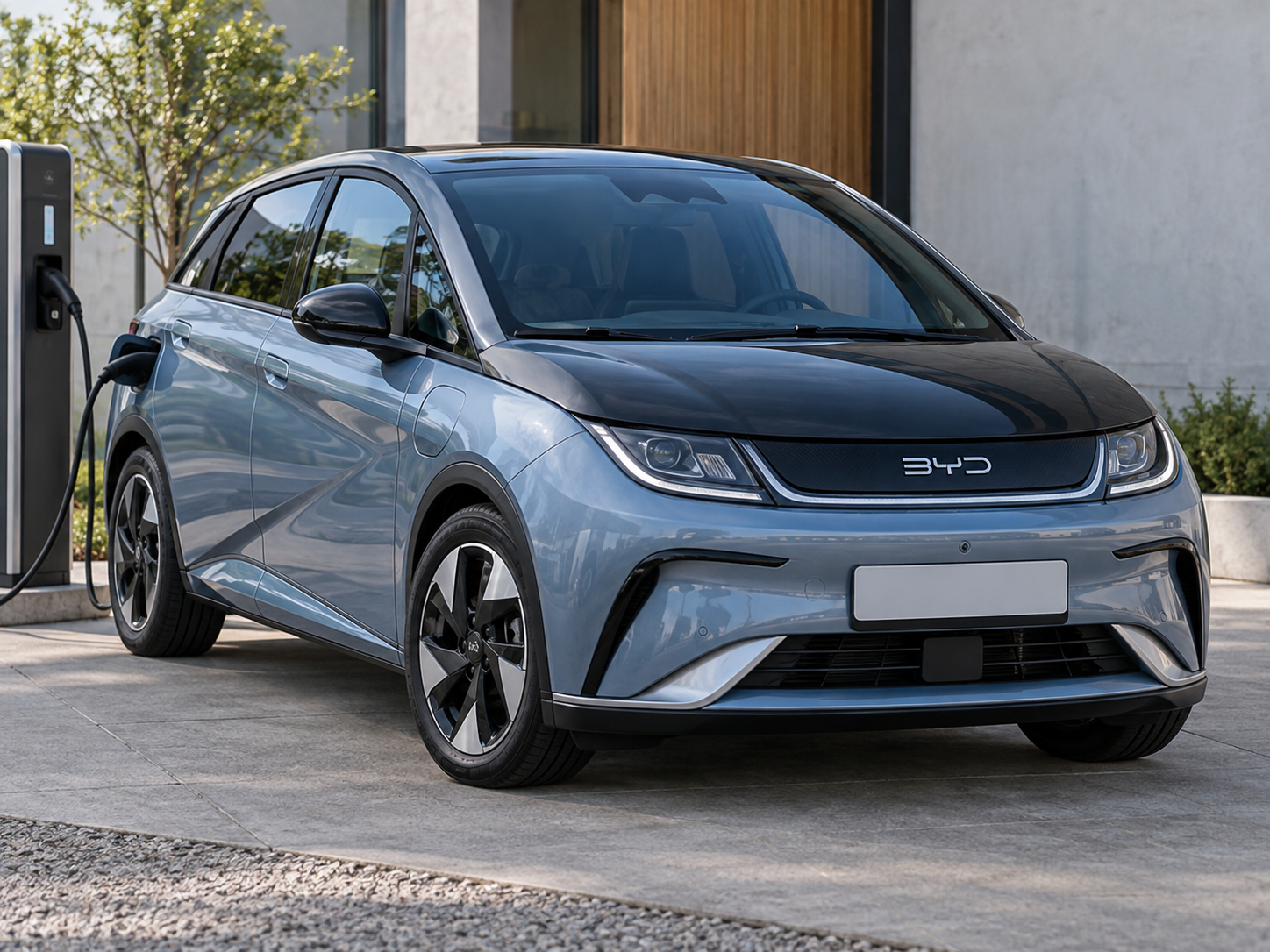
The DOLPHIN SURF is the smallest electric car in BYD’s European range. Its compact dimensions suit urban driving, shorter daily routes and locations where parking space is limited.
European versions use Type 2 for AC charging and CCS2 for compatible public DC charging. The smaller battery can make overnight home charging particularly practical, although the supported power should be checked against the exact version.
BYD DOLPHIN
The DOLPHIN is a larger electric hatchback with more passenger space and greater suitability for mixed urban and regional driving. It remains compact enough for everyday use while providing more flexibility for passengers and luggage.
Its European charging arrangement normally combines Type 2 AC and CCS2 DC connections. Battery and charging specifications differ between versions, so the model name alone is not sufficient when choosing equipment.
BYD ATTO 2
The ATTO 2 is a compact electric SUV positioned below the ATTO 3 in size. It combines a raised driving position with dimensions intended to remain manageable in towns, narrow streets and busy car parks.
European-market vehicles normally use Type 2 and CCS2 connections. Maximum AC and DC charging rates depend on the battery and version selected.
BYD ATTO 3
The BYD ATTO 3 is a compact crossover SUV designed for everyday family use. Its higher seating position, practical cabin and luggage space allow it to cover commuting, school journeys and longer routes without moving into the dimensions of a large SUV.
Charging specifications have developed across different versions and markets. Drivers should check the production year and vehicle documentation before selecting a charger based only on information for another ATTO 3.
BYD SEAL
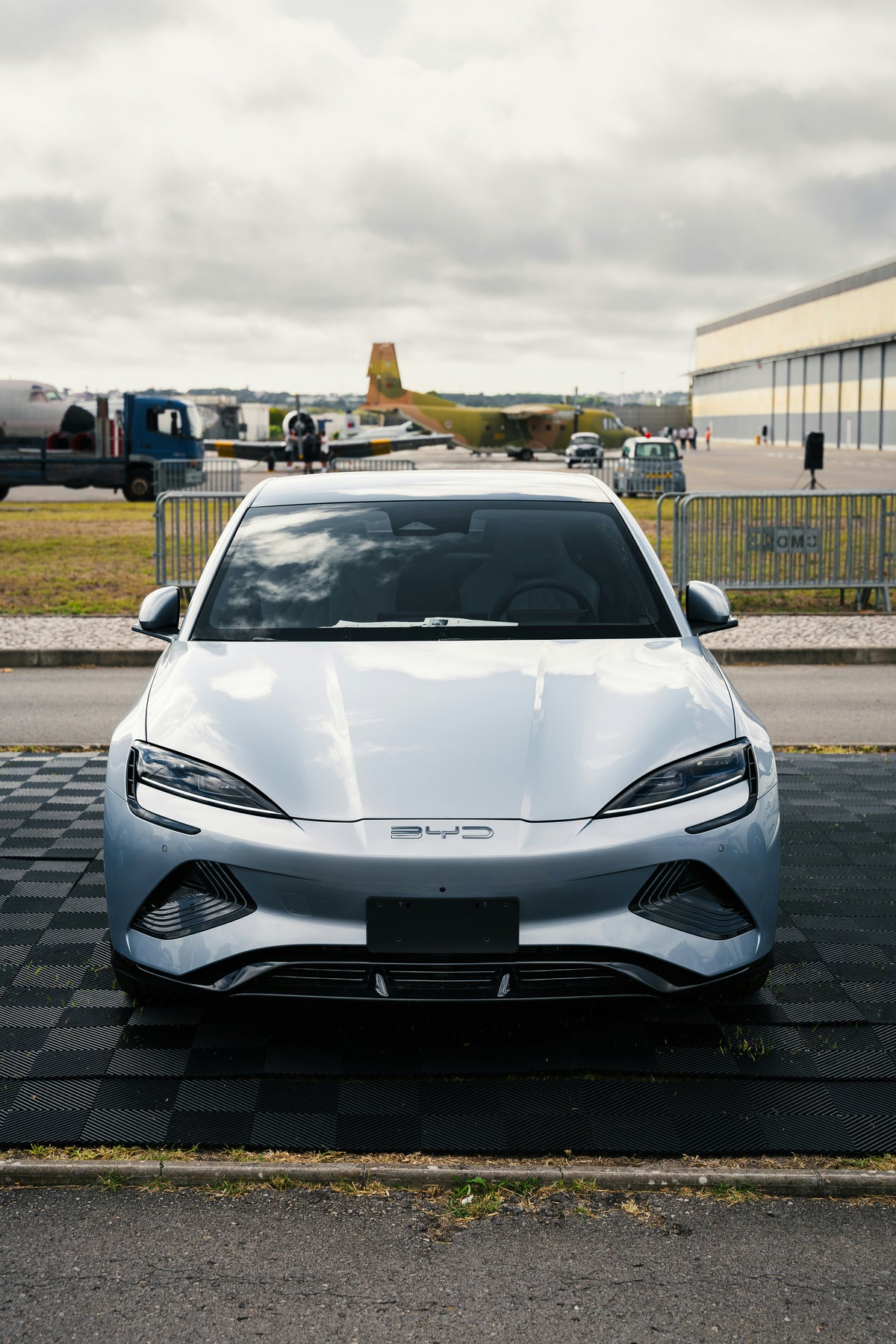
The SEAL is a low-bodied electric saloon intended for drivers who value motorway efficiency and more performance-focused road behaviour. Depending on the version, it may use a single-motor or all-wheel-drive powertrain.
Its lower profile gives the SEAL different energy-consumption characteristics from a taller SUV. Wheel size, drivetrain and battery specification can all affect its official and real-world range.
BYD SEAL U
The pure-electric SEAL U is a spacious family SUV with an emphasis on passenger comfort and luggage capacity. Its size makes it suitable for households that need more interior room without moving to a seven-seat vehicle.
The electric SEAL U should not be confused with the SEAL U DM-i plug-in hybrid. The two versions have different powertrains, battery capacities and charging requirements, even though they share part of the model name.
BYD SEALION 7
The SEALION 7 is a larger electric SUV with versions developed around higher performance and longer-distance use. Its cabin and luggage space suit family travel, while the available powertrains give it a different character from the smaller ATTO models.
Battery capacity, drivetrain and maximum charging power vary across the range. These details should be confirmed before planning the home installation or expected rapid-charging stops.
BYD TANG
The TANG is a seven-seat electric SUV with all-wheel drive. Its larger body provides additional passenger space and makes it suitable for families that need three rows of seating.
Vehicle weight, passenger load and motorway speed influence real-world energy use, particularly on longer journeys. European versions use Type 2 AC and CCS2 DC charging.
BYD HAN
The HAN is a large electric saloon designed for executive and long-distance driving. Its lower body distinguishes it from BYD’s SUV models, while all-wheel-drive versions provide stronger acceleration and traction.
A European HAN will normally use Type 2 and CCS2, but privately imported vehicles require closer inspection. The charging port and original market should be confirmed before ordering equipment.
BYD Plug-in Hybrid Models
BYD’s DM-i range includes models such as the ATTO 2 DM-i, SEAL U DM-i, SEAL 5 DM-i, SEAL 6 DM-i, SEAL 6 DM-i Touring, SEALION 5 DM-i, DOLPHIN G DM-i and SHARK. Availability differs between countries, and the line-up continues to develop.
Not every plug-in hybrid supports the same charging functions. Connector type, AC input and any available DC capability must be checked for the exact model and year rather than inferred from another vehicle in the DM-i family.
Find the Right BYD Charging Equipment at EVniculus
The badge on the vehicle does not provide enough information to choose a complete charging setup. A European BYD and a visually similar car imported from China may require different cables, chargers and adapters.
At EVniculus, we help drivers identify the charging standard fitted to their vehicle and select compatible home chargers, portable units, Type 2 cables and GB/T adapters. For imported cars, we check the original market, production year, charging port and intended AC or DC use.
Matching the equipment to the exact vehicle reduces the risk of failed charging sessions, unnecessary adapters and hardware that cannot deliver the expected performance. It also gives BYD drivers a practical way to use the charging infrastructure available where they live, work and travel.