
For most European EV owners, home charging is straightforward. The car is plugged in during the evening, charging continues overnight, and by morning the battery is ready. This rhythm fits naturally with AC charging and explains why wallboxes dominate residential setups across Europe. The picture starts to change when CHAdeMO enters the discussion, because a chademo ev charger does not follow the same logic.
CHAdeMO belongs to the world of DC fast charging. It was created for situations where time matters and where electrical infrastructure is built to sustain high, continuous loads. That context is very different from a private home. Still, CHAdeMO vehicles remain part of the European landscape, particularly among Japanese imports, and some owners inevitably start asking whether bringing this technology home is realistic. The answer is rarely simple and depends on how CHAdeMO behaves in practice, what it demands electrically, and whether the advantages justify the effort.
This perspective reflects hands-on experience with CHAdeMO vehicles and charging setups, including real installation scenarios reviewed by EVniculus.
What is a CHAdeMO EV charger and how does it work?
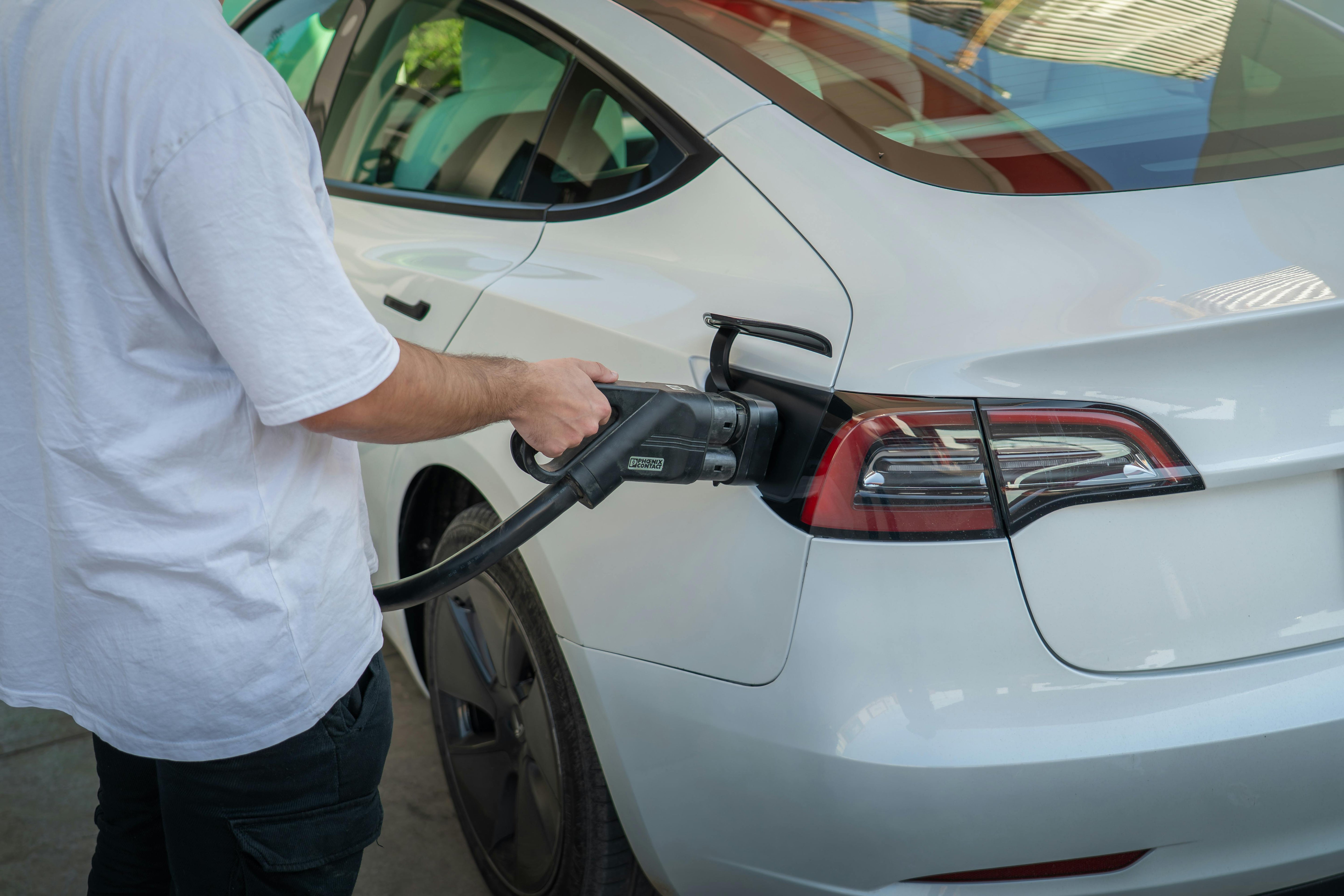
A chademo charger supplies direct current directly to the vehicle battery through a dedicated CHAdeMO connector. With AC charging, electricity reaches the car as alternating current and is converted internally by the onboard charger. CHAdeMO shifts that conversion outside the vehicle and into the charger itself.
That single design decision explains much of what follows. By handling the conversion externally, CHAdeMO allows higher charging power, but it also introduces larger, more complex equipment and far greater electrical demands. In everyday European use, most CHAdeMO-equipped passenger vehicles operate within a relatively narrow power range. Although the protocol itself supports much higher figures, the majority of cars draw around 40–50 kW under optimal conditions, with charging speed governed by the vehicle’s own battery management system.
So when someone asks what is a chademo ev charger, it is more accurate to think of it as a compact piece of public DC infrastructure, rather than a faster version of a home wallbox.
Is a CHAdeMO charger suitable for home installation?
From a technical point of view, installing a chademo charger at home is possible. Whether it makes sense is a different question.
DC fast charging places sustained stress on electrical systems that most European homes were never designed to handle. Even a 50 kW charger operates in a completely different category from residential AC charging, typically requiring three-phase supply, reinforced protection, and often upgrades to the grid connection itself.
The contrast becomes clear when numbers are involved. A typical 11 kW wallbox draws roughly 16 amps per phase. A DC charger delivering 50 kW can require several times that current per phase, depending on voltage and efficiency. That difference alone is enough to trigger significant electrical work in many properties.
As a result, home CHAdeMO installations tend to make sense only when charging speed has a direct impact on daily use. Frequent long-distance driving, tight turnaround times, or multiple vehicles sharing one charging point are common examples. For routine overnight charging, AC solutions remain far more practical.
How does CHAdeMO charging differ from other EV standards?
The distinction between chademo charging and other standards goes deeper than connectors.
CHAdeMO was designed as a DC-first system. The charger carries the power electronics, cooling, and safety systems needed to manage high-current charging. AC standards take the opposite approach, placing complexity inside the vehicle and keeping external equipment simpler and more compatible with residential electrical systems.
Within Europe, this difference has practical consequences. While CHAdeMO continues to serve existing vehicles, new fast-charging infrastructure increasingly centres around CCS, gradually shifting CHAdeMO into a more specialised role rather than a universal solution.
How much does a CHAdeMO charger cost to install at home?
When considering the cost of a home chademo ev charger, it helps to separate expectations from reality.
The charger itself represents a noticeable investment compared to AC wallboxes, largely due to the internal power electronics and cooling systems required for DC operation. In many cases, however, the charger is not the most expensive part of the project.
Installation often becomes the dominant factor. Electrical upgrades, new cabling, protection systems, and civil works such as trenching or structural modifications can quickly outweigh the cost of the equipment. The final figure depends heavily on the existing electrical layout and how much work is needed to make the site suitable for DC charging.
In properties with short cable runs and sufficient capacity, costs may remain manageable. In others, infrastructure becomes the defining constraint.
Real charging scenario: CHAdeMO at home in practice
To translate this into real-world terms, consider a Nissan Leaf 40 kWh, one of the most common CHAdeMO-equipped cars in Europe.
At a low state of charge, the Leaf typically draws around 45 kW on a CHAdeMO connection. Charging from 20% to 80% requires roughly 24 kWh of usable energy. Under favourable conditions, this takes around 40 to 45 minutes, with charging power tapering noticeably beyond the 60% mark.
At home, that means a CHAdeMO setup can deliver in under an hour what an 11 kW AC wallbox would provide in approximately 2.5 to 3 hours. The time saving is tangible, but so is the additional complexity required to achieve it.
This trade-off sits at the heart of the decision.
When do you need a CHAdeMO adapter for home charging?
For standard residential AC charging, a chademo adapter is generally irrelevant. CHAdeMO does not play a role in AC charging workflows.
Adapters become relevant when DC standards overlap. As European fast-charging networks increasingly prioritise CCS, owners of CHAdeMO vehicles often look to options such as a chademo to ccs adapter or ccs to chademo adapter to maintain access to DC infrastructure.
What these adapters do not do is change the fundamentals of home charging. They extend compatibility, not charging speed, and they do not override the vehicle’s inherent limits.
Is installing a CHAdeMO EV charger at home worth it in the long term?
From a purely economic perspective, home DC charging is difficult to justify. AC charging remains the most cost-effective way to charge an EV in Europe.
Where CHAdeMO can make sense is in operational terms. If saving 30 to 40 minutes per charging session materially affects how a vehicle is used, the investment may be defensible. If charging already fits comfortably into overnight windows, the long-term return is limited.
What should you consider before choosing a CHAdeMO charger for home use?
The starting point should always be the vehicle. Real charging curves matter more than advertised maximums, and many CHAdeMO vehicles taper early, reducing the practical benefit of DC charging.
The second consideration is electrical reality. An honest assessment of capacity and upgrade requirements avoids costly surprises later.
Finally, long-term compatibility should not be ignored. In a European market increasingly shaped around CCS, CHAdeMO solutions make the most sense for owners committed to their current vehicle rather than those planning around future standards.
Frequently Asked Questions about CHAdeMO home charging
Can a home electrical battery or solar system support a CHAdeMO charger?
In most residential setups, no. Even when a home has solar panels or a battery storage system, their output is typically designed to supplement household consumption, not to sustain continuous DC fast charging. A CHAdeMO charger draws power levels that exceed what residential batteries and inverters are meant to deliver over extended periods. In practice, solar and storage systems can reduce overall grid consumption, but they do not replace the grid capacity required for CHAdeMO charging.
Does frequent CHAdeMO charging at home increase battery degradation?
Frequent DC fast charging can accelerate battery wear compared to AC charging, particularly if the vehicle is regularly charged at high power or to high state of charge. Most CHAdeMO-equipped vehicles manage this through conservative charging curves, but owners who rely heavily on DC charging should expect slightly faster long-term degradation than with predominantly AC charging. The effect is gradual, not immediate, and depends strongly on charging habits and battery thermal management.
Is it possible to limit charging power on a CHAdeMO charger installed at home?
Some DC chargers allow configurable power limits, but reducing charging power does not automatically reduce installation requirements. Even if the charger is set to operate below its maximum output, the electrical infrastructure must still be designed to handle full load safely. Power limiting can help with battery longevity and heat management, but it does not eliminate the need for robust electrical capacity.
Can a CHAdeMO charger be installed indoors, such as in a garage?
In principle, yes, but indoor installations require careful consideration. DC chargers generate significant heat and often rely on active cooling. Adequate ventilation, clearance, and fire safety measures are essential. In many residential cases, outdoor or semi-outdoor installation is preferred to simplify cooling and safety compliance.
Will future software updates extend CHAdeMO charging speed on older vehicles?
In most cases, no. Charging speed is primarily determined by hardware limits within the vehicle, including battery design and power electronics. Software updates may improve stability or optimise charging curves slightly, but they do not fundamentally change the maximum charging power a CHAdeMO vehicle can accept.
Is a portable CHAdeMO charger a realistic option for home use?
Portable DC chargers exist, but “portable” is a relative term. Even compact DC units are heavy, require substantial electrical supply, and are not comparable to portable AC chargers. For home use, portability offers little practical advantage unless the charger is shared between multiple locations with suitable electrical infrastructure.
Can a CHAdeMO home installation be reused for a future CCS vehicle?
Generally, no. CHAdeMO and CCS are fundamentally different DC standards. A CHAdeMO charger cannot be directly reused for CCS vehicles without major modification or replacement. This is an important consideration for owners planning to change vehicles in the future.