
For a long time, power outages were treated as unlikely edge cases, something that happened elsewhere, or once every few years. That perception has changed. Across Europe, interruptions in electricity supply are becoming part of everyday planning, driven by extreme weather, local grid overload, and increasing peak demand. In this context, electric vehicle owners often ask a very practical question: can the car sitting in the driveway actually help when the lights go out?
From our work at Evniculus with EV charging equipment and real customer use cases, one function keeps coming up in these conversations: v2l charging. At its core, it allows certain electric vehicles to supply electricity outward, using energy stored in the traction battery. While this feature is frequently presented as a lifestyle add-on, its technical capabilities make it far more relevant in emergency situations than many drivers initially realize.
The key is understanding what V2L can realistically do, and just as importantly, what it cannot.
Can you use V2L charging during power outages?
Yes, but only if it is approached correctly. V2L is designed to operate as a self-contained power source, not as a direct substitute for household wiring. In practical terms, this means powering devices straight from the vehicle using an approved outlet or adapter, rather than attempting to integrate the car into the home’s electrical system.
Most V2L-enabled electric vehicles in Europe deliver single-phase alternating current at 230 volts, which matches standard household voltage. This allows common appliances to run without special converters. To protect the battery, manufacturers typically allow the driver to define a minimum state-of-charge limit, often around 20–30 percent, after which power export stops automatically. This ensures that emergency use does not leave the vehicle unusable.
Where problems arise is when drivers try to push V2L beyond its intended role. Feeding power back through wall sockets without proper isolation is unsafe and can damage equipment or endanger utility workers. Without a professionally installed transfer switch, V2L should remain a portable, device-level solution rather than a way to energize fixed household circuits.
What is V2L charging?
Many EV owners first encounter the concept by asking what is v2l charging, and the simplest explanation is often the most accurate. It is a controlled discharge mode that allows an electric vehicle to convert stored battery energy into usable alternating current for external devices.
This is closely linked to the idea of vehicle to load, which describes energy flowing from the car to whatever is connected to it. Instead of consuming electricity, the vehicle temporarily becomes the source. Importantly, this happens within tightly defined electrical boundaries that prioritize safety and battery protection.
What does vehicle-to-load mean?
The term vehicle-to-load refers specifically to one-way power delivery from the vehicle to external equipment. Unlike systems that interact with household wiring or the public grid, V2L operates independently. The car’s onboard inverter converts high-voltage DC from the battery into regulated AC output, while monitoring temperature, voltage stability, and current draw in real time.
In European configurations, this typically means 230 V AC with a current limit close to 16 amperes. Under these conditions, the maximum continuous output usually reaches around 3.6 kilowatts, although the exact figure depends on the vehicle model and its certification.
When is V2L charging used?
In real life, V2L is used whenever electricity is needed temporarily and predictably. During blackouts, it helps keep refrigeration running, internet connections alive, and basic lighting available. Outside emergency situations, it appears in mobile work setups, outdoor events, and travel scenarios where grid access simply is not an option. What all these cases have in common is short- to medium-term use, not permanent energy supply.
How does V2L charging work?
Technically speaking, V2L relies on a managed discharge of the EV’s high-voltage battery, which often operates internally at several hundred volts DC. The vehicle’s power electronics convert this energy into single-phase AC while continuously supervising system behavior.
Drivers can usually define a discharge threshold, for example, instructing the vehicle to stop supplying power once the battery reaches 30 percent. This prevents accidental overuse and preserves mobility. At the same time, strict limits on current, temperature, and voltage fluctuations are enforced automatically. If demand exceeds what the system allows, power output is cut instantly.
The role of a vehicle-to-load adapter
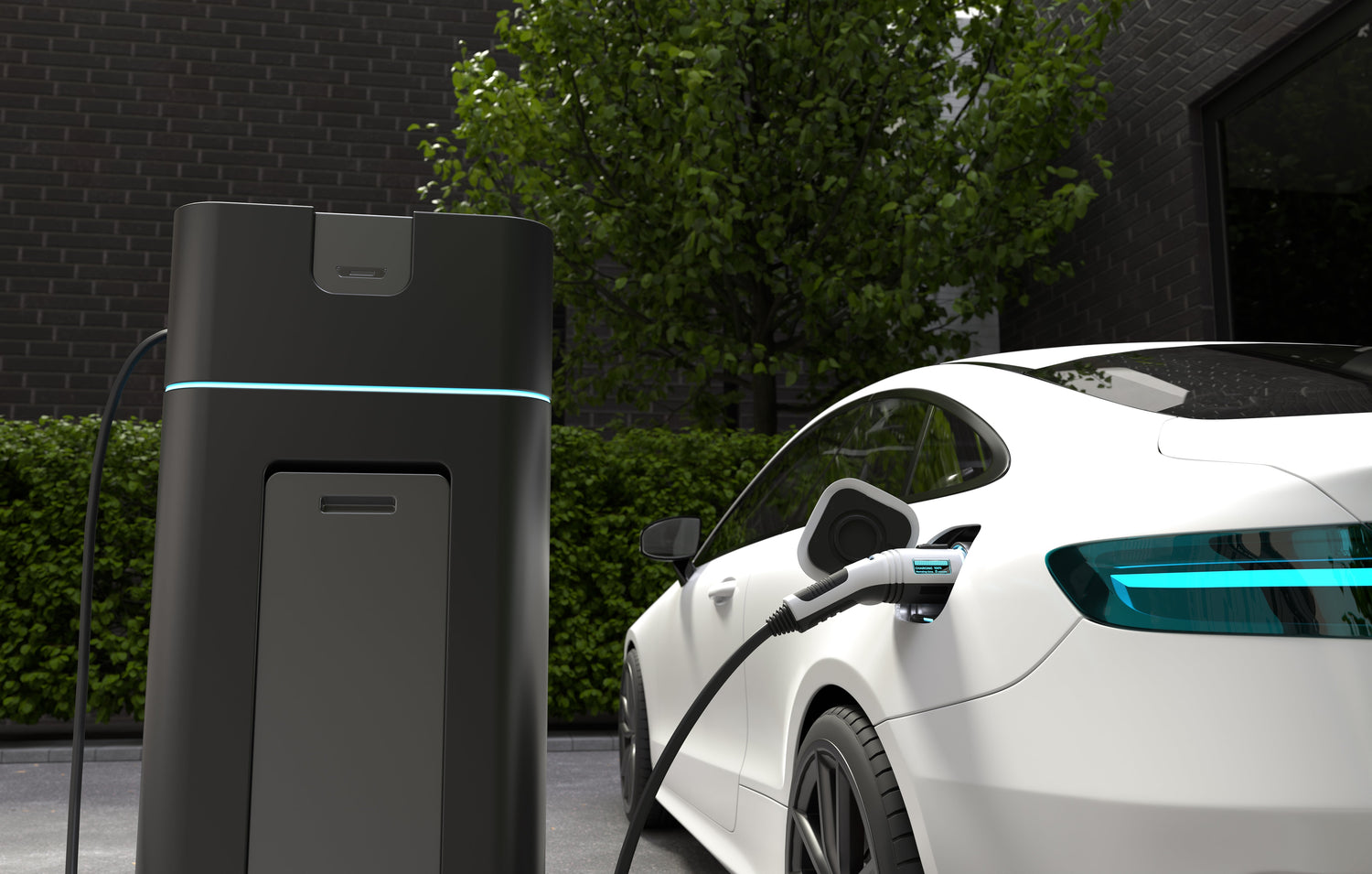
In many European EVs, external power delivery is enabled via a vehicle to load adapter connected to the Type 2 charging port. This component is more than a simple plug. It communicates with the vehicle, confirms compatibility, and provides a standard household socket rated for the car’s maximum output.
Typically designed for 230 V and up to 16 A, such adapters allow peak outputs of roughly 3,600 watts under optimal conditions. Integrated grounding and load detection ensure that power is delivered only when operating parameters remain within safe limits.
Power output and limitations
In everyday conditions, most V2L-capable vehicles deliver between about 2.2 kW and 3.6 kW of continuous power. Some models deliberately restrict output to lower levels: around 9–10 A, or roughly 2,000–2,300 W, to reduce thermal stress and extend component life.
That power is shared across everything connected. A refrigerator may only draw 100–200 W once running, but its compressor can briefly demand several times that amount during startup. If other devices are already drawing power, these surges can push the system past its limit and trigger shutdown. On top of that, DC-to-AC conversion losses of roughly 5–10 percent mean that usable output is always slightly lower than the battery’s theoretical capacity.
Which devices can be powered with V2L charging?
In real situations, V2L tends to work best with devices that draw power steadily rather than aggressively. Cooling appliances are a good example. Once a fridge or freezer has settled into its normal cycle, its energy use is relatively modest, usually staying within a few hundred watts, which makes it manageable even during longer outages. Everyday electronics behave in a similar way. A television, depending on its size and settings, rarely becomes the dominant load, and small circulation pumps used in heating systems generally remain within a comparable consumption window.
The balance shifts noticeably when appliances designed to generate heat are introduced. Equipment like kettles, coffee machines or microwaves behaves very differently, drawing a large amount of power almost instantly when switched on. In those moments, consumption can climb into the kilowatt range and, in some cases, approach the upper limits that V2L systems allow. Used briefly and on their own, such devices may still be workable, but once several loads overlap, the system reaches its ceiling much faster than many users expect. This is why high-demand equipment such as electric heaters, ovens or full home air-conditioning units rarely fit into realistic V2L scenarios.
To understand why this matters, it helps to look at a typical blackout setup rather than theoretical limits. A household that keeps a refrigerator running, maintains internet access, uses a few LED lights and charges a laptop is dealing with a relatively light and predictable load. Even when these devices are active at the same time, the total demand remains modest. With a modern electric vehicle battery still holding a substantial energy reserve above a chosen safety limit, that kind of setup can be sustained for a long stretch of time, often far longer than people initially assume.
What to expect from V2L during outages?
V2L is not about replacing the grid. It is about resilience. When its limits are understood and respected, it turns an electric vehicle into a reliable, flexible backup power source that delivers genuine value when electricity is unavailable. From our perspective at Evniculus, this is not future tech, it is a practical capability that EV owners can already rely on today.