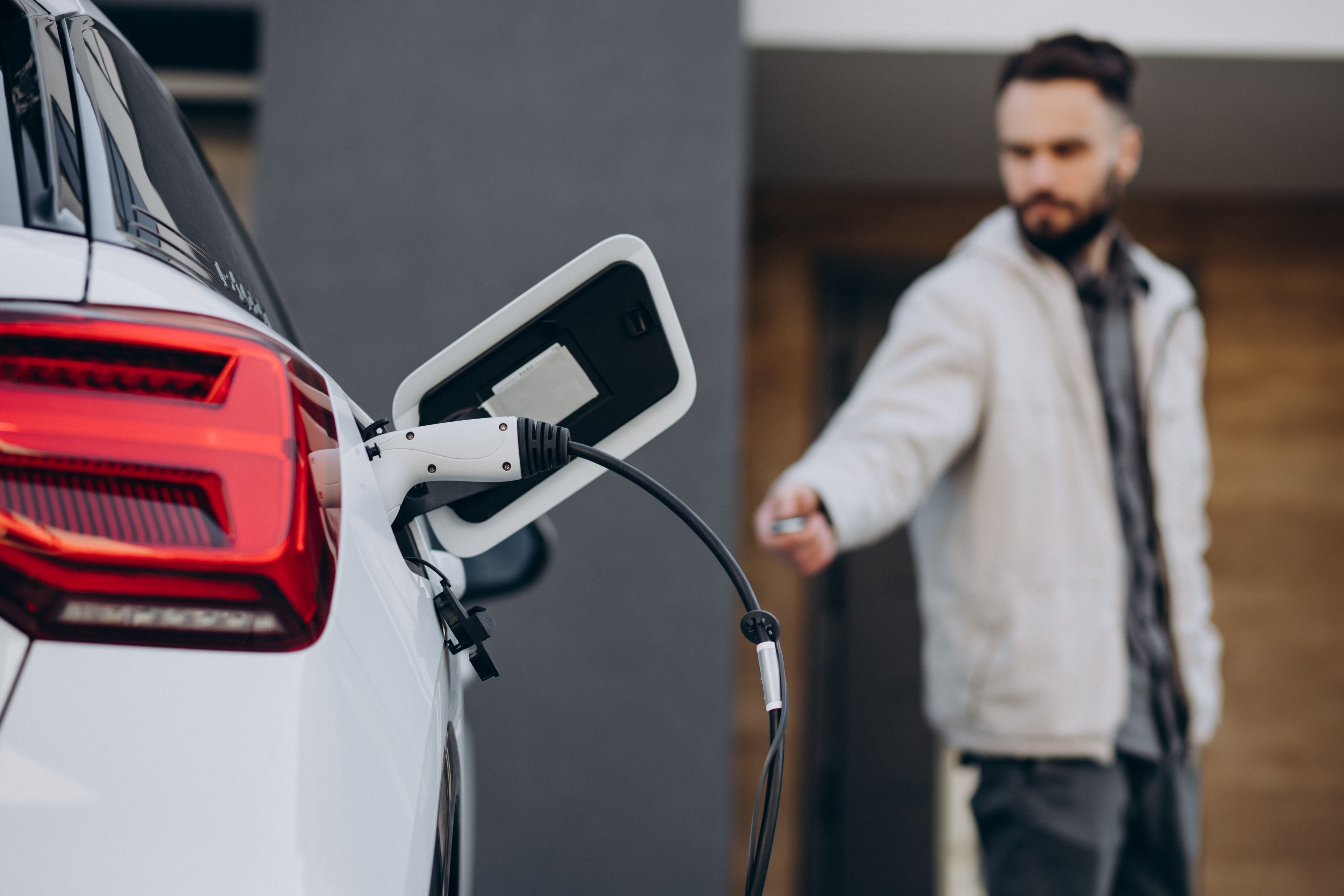
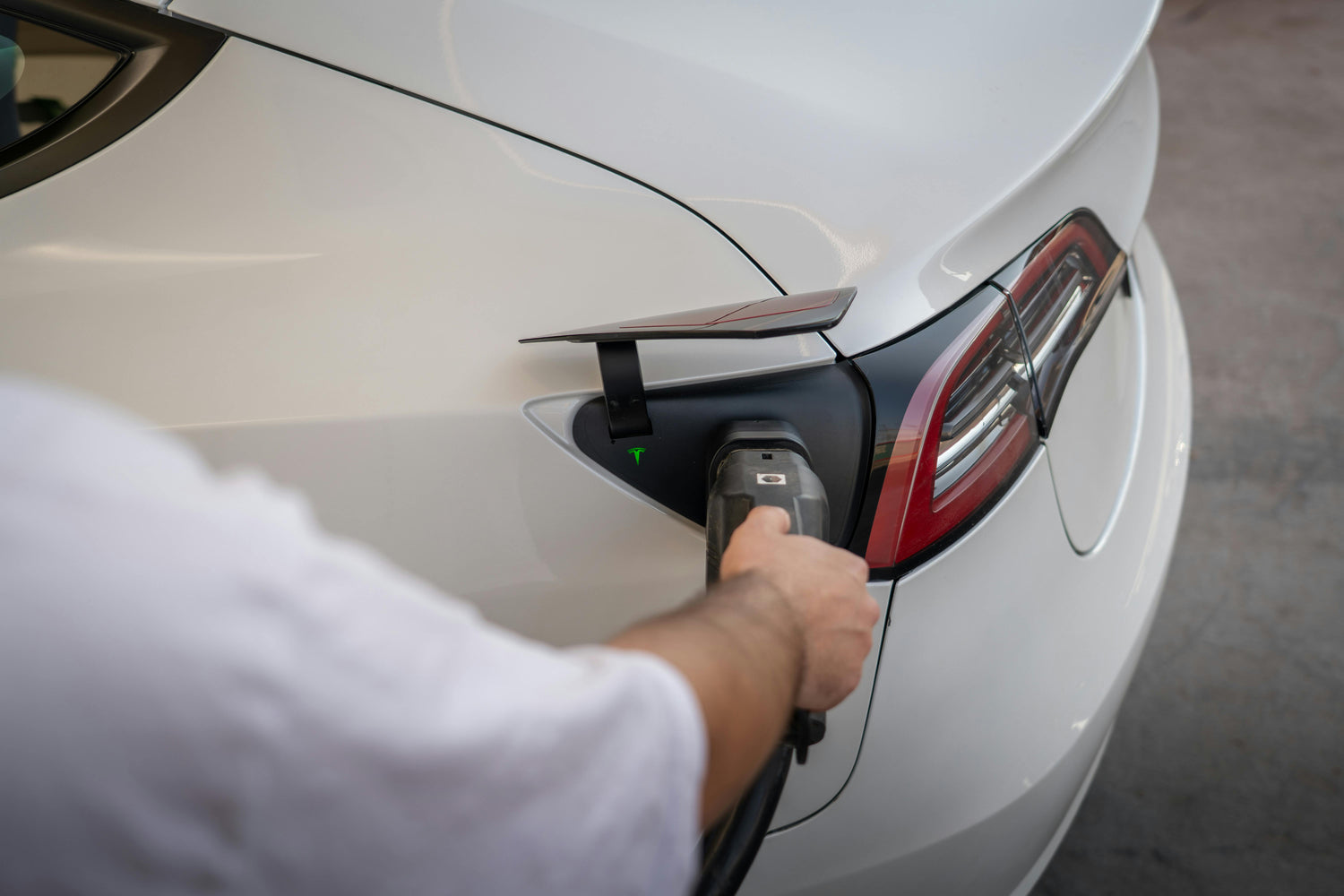
Electric vehicle charging in Europe looks simple only until you actually have to use it. Most drivers start with a basic assumption: plug in, charge, drive. Very quickly, that assumption meets reality. Different plugs, different speeds, different rules depending on where you are and what you drive.
At Evniculus, we see this confusion every day. Not because people are uninformed, but because the charging ecosystem itself grew in layers rather than as a single plan. Understanding charger types is less about memorizing standards and more about understanding how Europe ended up with the mix we see today.
What is an EV charger?
At the most basic level, an ev charger is the bridge between electricity and mobility. It manages how power flows from the grid into a vehicle’s battery, deciding how fast that happens and under what conditions. That sounds straightforward, but the experience varies widely depending on whether charging happens at home, in a city, or on a motorway.
In Europe, this variation exists because charging was never designed as one universal system from the start. It evolved through regulation, manufacturer decisions, and practical constraints.
How EV charging works in Europe?
European charging relies on two fundamentally different approaches. For everyday use, alternating current dominates. It is slower, predictable, and well suited to long parking times. For longer trips, direct current takes over, delivering energy straight to the battery at much higher power.
This split explains why some connectors feel familiar and routine, while others are associated with speed and urgency. It also explains why compatibility matters more on the road than it does at home.
EV charger installation basics
Home charging is often where these differences become personal. A proper ev charger installation is not just about convenience, but about reliability and long-term safety. Electrical capacity, load balancing, and future vehicle upgrades all matter more than most drivers expect at first.
Once a home setup is in place, public charging stops being a necessity and becomes a supplement rather than a dependency.
Type 2 EV charger explained
The type 2 ev charger is the quiet constant in European EV charging. It does not attract attention, yet it underpins most daily charging across the continent. Adopted as a common standard, it allows drivers to move between countries without worrying about basic compatibility.
Its strength lies in consistency rather than speed.
What is a Type 2 charger used for?
A type 2 charger is built for situations where time is available. Overnight charging, workday parking, shopping trips, these are the moments where Type 2 fits naturally. Charging happens in the background, without pressure or urgency.
Because it relies on the vehicle’s onboard charger, speeds vary, but the experience remains predictable.
Type 2 EV charger for home and public charging
For many drivers, a Type 2 wallbox becomes the default ev home charger, quietly handling most energy needs. Public stations using the same connector extend that familiarity beyond the driveway, creating a sense of continuity that fast-charging systems rarely offer.
This stability is why Type 2 remains relevant even as faster technologies advance.
CCS EV charging explained
Speed enters the picture with CCS. ccs ev charging represents Europe’s answer to long-distance electric travel, designed to minimise stops and maximise flexibility. Unlike AC charging, CCS delivers power directly to the battery, bypassing the onboard charger entirely.
This is where charging begins to feel less like parking and more like refuelling.
How CCS EV charging works?
CCS combines familiarity with power. Its upper section mirrors the Type 2 interface, while additional contacts enable high-power DC delivery. Communication between the vehicle and charger constantly adjusts current and voltage to protect the battery while charging as quickly as conditions allow.
On busy routes, this makes the difference between planning a trip carefully and simply driving.
Differences between CCS and Type 2 charging
The contrast between CCS and Type 2 is not just technical, but experiential. Type 2 rewards patience and routine. CCS prioritises speed and spontaneity. One fits daily life, the other supports mobility beyond it.
European infrastructure increasingly reflects this distinction, with CCS dominating new fast-charging installations.
What is CHAdeMO charging?
The question what is chademo charging usually comes up when drivers notice something missing. CHAdeMO was one of the first DC fast-charging standards and played a major role in early EV adoption. It proved that rapid charging was possible long before CCS became mainstream.
In Europe today, its presence feels more historical than forward-looking, even though many vehicles still rely on it.
CHAdeMO vs CCS charging in Europe
Comparing CHAdeMO and CCS reveals how infrastructure decisions shape everyday experience. CCS continues to expand, supported by policy and manufacturer alignment. CHAdeMO, while still functional, is rarely prioritised in new installations.
This imbalance explains the growing interest in solutions like ccs to chademo converters and devices often referred to as chademo adapter ccs. They emerge not from preference, but from necessity, attempts to bridge a gap created by shifting standards.
Such solutions can help in specific cases, but they do not reverse the broader trend. In Europe, CCS is where expansion happens, while CHAdeMO serves a diminishing, though still important, segment.
Perspective from Evniculus
Choosing the right charging solution is less about finding the “best” standard and more about understanding how standards fit into real driving habits. Whether someone relies on a portable ev charger, charges mainly at home, or depends on fast chargers for travel, the connector type quietly shapes every decision.
At Evniculus, we believe clarity matters more than optimism. Knowing how Type 2, CCS, and CHAdeMO function within Europe’s charging landscape allows drivers to plan realistically, avoid frustration, and make choices that still make sense years down the line.